
The August Birthstone, Explained: A Complete Canadian Guide to Peridot, Spinel, and Sardonyx
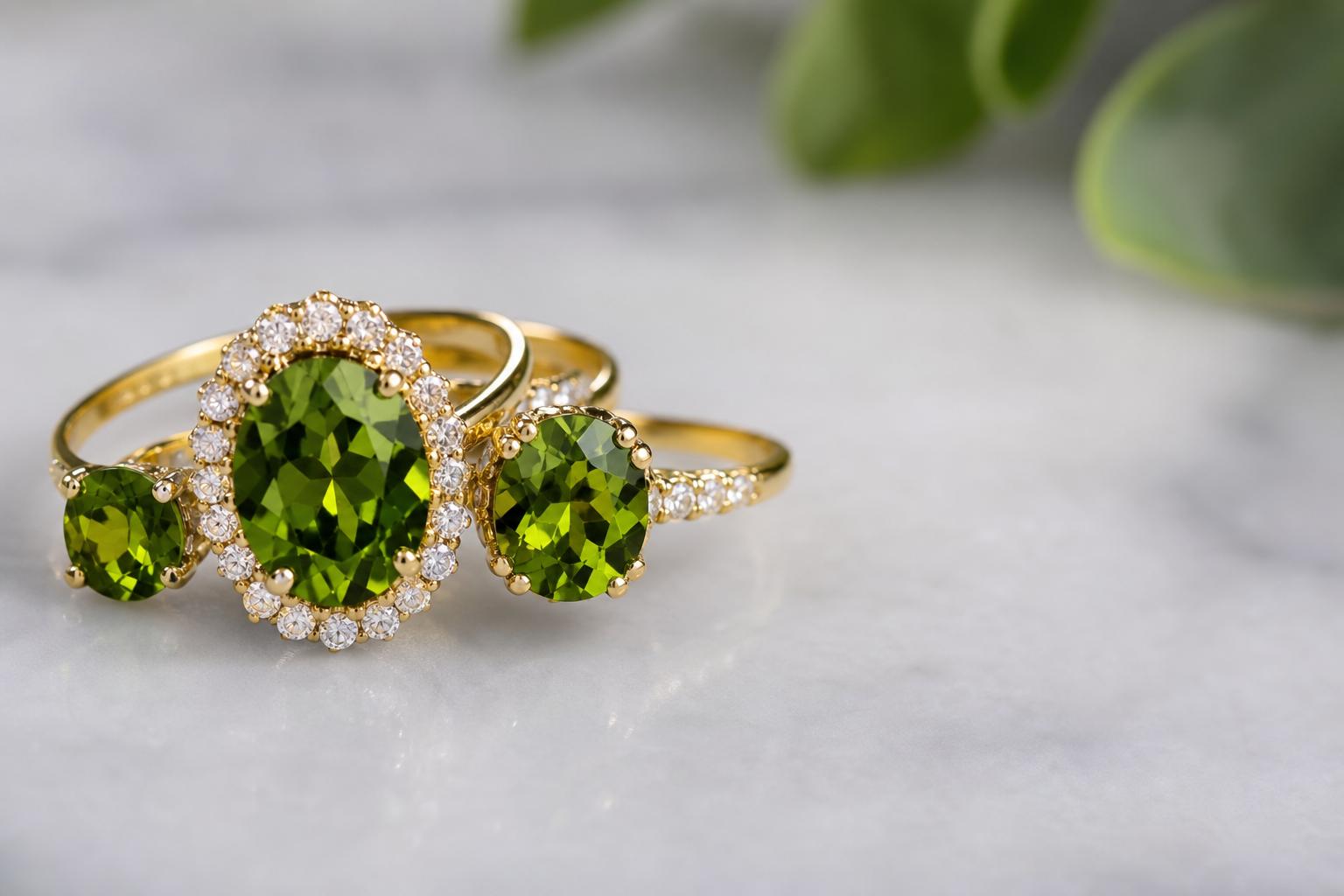
August is a summer month in full colour: field greens, sunset oranges, and skies that swing from cobalt to lavender. Fittingly, the August birthstone isn’t just one gem—it’s a trio. If you’re shopping in Canada for a birthday gift, planning a custom ring, or simply curious about the story behind August’s gems, this guide breaks down everything you need to know about peridot, spinel, and sardonyx. You’ll learn how to judge quality, what to expect on price, how to navigate Canadian taxes and appraisals, and how to choose pieces that actually hold up in real life.
We’ll go beyond surface-level folklore. You’ll get practical, unromantic advice too: which settings protect softer stones, what treatments to ask about, and how to keep your purchase safe with a proper appraisal and insurance. Ready to find the right August birthstone for your style and budget? Let’s start with what “August birthstone” means today.
What Is the August Birthstone? Why There Are Three
For most of the 20th century, the modern August birthstone was peridot, a bright, grassy green gem and the best-known representation of the month. In 2016, the American Gem Trade Association and Jewelers of America added spinel as an official August option. Sardonyx, a banded variety of chalcedony, is August’s traditional birthstone going back centuries. Each brings a different personality and price point, which is why jewellers often feature all three in August collections.
In practical terms, here’s how most Canadian shoppers approach it:
- Peridot if you want classic “August” green—bright, summery, and usually affordable for its size.
- Spinel if you want a tougher, heirloom-quality gemstone in richer colours (red, pink, blue, lavender, grey, and more), with pricing that ranges from approachable to investment-level.
- Sardonyx if you love historic jewellery, carved cameos, or want a durable, budget-friendly stone with a distinct look.
There’s no wrong pick. The “best” August birthstone is the one that fits your aesthetic, lifestyle, and budget. The sections below help you dial that in.
Peridot: The Modern August Birthstone
What Peridot Is, Geologically
Peridot is the gem variety of olivine, a magnesium-iron silicate that forms deep in the Earth’s mantle and rides to the surface in lava. That lush green? It’s the iron talking. Unlike many green gems that get their colour from trace elements like chromium or vanadium, peridot’s colour is intrinsic to the mineral itself—meaning it’s always some shade of green, never blue or red. You’ll see hues from yellow-green to olive to a slightly brownish green as iron content and viewing conditions shift.
Occasionally, peridot comes from space. Tiny crystals show up in pallasite meteorites—remarkable for collectors but rarely used in everyday jewellery due to size and scarcity. Most jewellery-grade peridot today is mined on Earth in places like the San Carlos Apache Reservation in Arizona (a major source), Pakistan’s mountains, Myanmar, and parts of China and Vietnam. Egyptian deposits on Zabargad (St. John’s Island) are historically famous but largely exhausted.
Colour, Clarity, and Cut: How to Judge Quality
Colour carries the most weight for peridot value. The sweet spot is a lively green with minimal brown or gray. You’ll hear descriptors like “lime,” “apple,” or “olive.” Many buyers in Canada prefer a medium tone—bright enough to pop in our long winters, yet strong enough to hold its colour in softer summer light. Cool daylight can make peridot shift more yellow-green; warm indoor lighting can give it a deeper olive quality.
Clarity matters. Eye-clean peridot (no visible inclusions to the naked eye) commands a premium. One common inclusion is a disc-like “lily pad,” which can be charming in small doses but distracting if abundant. The larger the stone, the more likely you’ll notice inclusions.
Cut is about sparkle and face-up colour. Peridot has relatively high birefringence (double refraction), which can make facets look slightly fuzzy in big stones if the cutter isn’t careful. Precision cutting mitigates that. You’ll find a lot of checkerboard tops on peridot to boost scintillation in pendants and statement rings. If you love clean lines, a well-cut emerald or cushion shape can look refined and modern.
Durability and Daily Wear
On the Mohs scale, peridot is about 6.5 to 7—hard enough for occasional rings and excellent for earrings and pendants, but not a bulldozer. It has no prominent cleavage but can chip with sharp blows. It’s also sensitive to sudden temperature changes and strong acids. If you work with your hands or are hard on jewellery, choose protective settings: bezel or half-bezel around the gem, thicker prongs, or a halo that absorbs bumps.
For an engagement ring or a daily-wear band, you’ll need extra care. Many Canadian jewellers suggest reserving peridot for a right-hand ring worn thoughtfully, or setting it low with a substantial bezel. For maximum durability in a ring you’ll wear every day without thinking, spinel (covered below) is the sturdier August choice.
Treatments and Enhancements
Most peridot is not treated, which is good news if you value natural colour. Heat treatment is uncommon and doesn’t typically improve peridot in a meaningful way. Surface coatings appear occasionally on low-grade material; they can alter the apparent colour but should be disclosed and avoided for rings because coatings eventually wear.
Origins and Ethical Considerations
You’ll commonly see peridot from:
- Arizona (San Carlos Reservation) – consistent, bright greens, often used in North American jewellery.
- Pakistan and Myanmar – can yield richer, slightly darker greens prized by collectors.
- China and Vietnam – a wide range of qualities, often supplying mainstream retail.
When discussing origin, ask your retailer how they know. For peridot, many sellers trace supply chain generally rather than with lab reports. If origin is important to you—perhaps you prefer supporting Indigenous sourcing in Arizona, or you want assurance of responsible mining—look for retailers who participate in responsible sourcing programs, are members of the Canadian Jewellers Association (CJA), or can describe their chain of custody with specificity.
Peridot Price Guide in Canada
Prices vary with colour, clarity, cut, and size. As a rough retail guideline in CAD (as of 2026, subject to brand premiums and market shifts):
- Commercial to good quality, 1–3 ct: roughly $60–$200 per carat.
- Fine quality with richer colour, 2–5 ct: about $200–$500 per carat.
- Top colour with strong saturation, 5–10+ ct: $400–$800+ per carat, sometimes more for exceptional stones from Pakistan or Myanmar.
Set jewellery—especially designer pieces or those from heritage Canadian houses like Maison Birks—adds fabrication costs, precious metal value, and brand markup. Expect rings and pendants with fine peridot in 14k gold to start around the low four figures from established retailers.
Buying Tips for Canadian Shoppers
Want the best value? Try these approaches:
- Shop in-person if you can. Peridot’s colour behaves differently under varied lighting. Viewing a few options in a Toronto, Vancouver, Calgary, Montreal, or Halifax boutique helps your eye calibrate.
- Ask for specifics: carat weight, exact measurements, treatments (if any), and the return policy in writing. While a lab report isn’t common for peridot, a detailed store appraisal helps with insurance.
- Check the metal hallmark. In Canada, the Precious Metals Marking Act requires that if karat marks (e.g., “14K”, “585”) appear, a registered trademark or manufacturer’s stamp must accompany them. Look for both.
- Protect the stone. Choose a setting style suited to your lifestyle. A bezel or halo is kinder to peridot than delicate claw prongs sticking up high.
Care and Cleaning
Skip ultrasonic and steam cleaners for peridot. Use warm water, a drop of mild dish soap, and a soft brush, then rinse and pat dry. Avoid prolonged heat and household acids (vinegar, lemon juice). Take the ring off for the gym, the garden, and the hockey rink. A jeweller’s quick check every year—tightening prongs, polishing the bezel—goes a long way.
Spinel: August’s Vibrant, Durable Alternative
What Spinel Is and Why It Matters
Spinel is a single-refractive, cubic mineral that, for centuries, impersonated ruby and sapphire. It occurs in a rainbow: fiery reds, electric hot pinks from Tanzania’s Mahenge, blues that range from denim to cobalt, silvery greys, purples, and pastel lavenders. The British Crown Jewels’ famous “Black Prince’s Ruby” is actually a red spinel. In August 2016, spinel joined the official list of modern August birthstones—great news if green isn’t your colour.
For jewellery, spinel has a lot going for it: excellent hardness (8 on the Mohs scale), no cleavage, and crisp brilliance when well cut. It’s generally untreated, though heat is sometimes used. Synthetic spinel is very common in low-cost birthstone jewellery, so disclosure matters. If you want natural spinel, buy from a reputable dealer and ask for documentation—or a lab report for higher-value stones.
Colour and Value
Colour drives price. A few patterns Canadian buyers will notice:
- Hot pink (Mahenge) and fine red spinel can be expensive—sometimes rivalling ruby pricing but still offering value compared to top-tier corundum.
- Blue spinel ranges widely. “Cobalt blue” spinel is rare and can command very high prices; more commonly, you’ll see greyer, inky blues at approachable prices.
- Lavender and pastel spinels are popular for delicate, modern designs and can be relatively affordable for their beauty.
- Grey spinel has become a quiet favourite for minimalist and men’s jewellery—understated, modern, and durable.
Clarity should be eye-clean in most fine spinel. Precision cutting elevates even modestly priced stones, so pay attention to how the gem looks in motion. A well-cut 1.5 ct spinel can outshine a heavier but sleepy stone.
Spinel Prices in Canada
Approximate retail ranges in CAD (as of 2026, subject to quality and brand):
- Grey, lavender, and some pastel colours: $300–$1,500 per carat in 1–3 ct sizes.
- Vivid pinks (Mahenge), some blues, and strong purples: $800–$5,000 per carat, depending on saturation and size.
- Fine red spinel: $2,000–$8,000+ per carat, with premiums above that for exceptional stones.
- Cobalt blue spinel with confirmed cobalt: $5,000–$20,000+ per carat, typically sold with lab reports.
These are broad. Spinel pricing is nuanced; two stones that look similar on paper can differ dramatically in person. If you’re spending several thousand dollars or more, consider an independent appraisal.
Treatments, Synthetics, and Disclosure
Natural spinel is often untreated. Heat treatment can occur and should be disclosed. Beware of synthetic spinel—common since the early 1900s via flame-fusion (Verneuil) and used heavily in vintage class rings and modern budget jewellery. If you see a “too perfect” vivid colour for a surprisingly low price, ask directly: Is it natural spinel? Created spinel? Another material altogether? A transparent seller will answer plainly and back it up with paperwork or a clear return policy.
Durability and Setting Choices
At Mohs 8 with no cleavage, spinel holds up very well in rings, including engagement rings. It’s less brittle than some beloved gems and shrugs off daily wear better than peridot. That said, you still want solid craftsmanship. In Canada’s winters, gloves can snag prongs; choose a lower-set design or a protective bezel if you’re rough on jewellery. Ultrasonic and steam cleaning are generally safe for untreated spinel, but if the stone is fracture-filled or heavily included (unusual in fine spinel), stick with warm soapy water.
Origins and Sourcing
Spinel comes from classic locales like Myanmar’s Mogok, Sri Lanka, Vietnam’s Luc Yen, Tanzania’s Mahenge and Tunduru, and Madagascar. Origin can influence price if the colour is characteristic (for example, intense “Mahenge” pinks). If a seller advertises origin-based premiums, a lab report is appropriate for higher-end purchases.
Buying Spinel in Canada
For significant pieces, look for:
- Clear identification: natural vs. synthetic, and any treatments.
- A reputable appraisal. In Canada, a GIA Graduate Gemologist or Fellow of the Canadian Gemmological Association (FCGmA) is a strong credential. Some appraisers hold CJA or Accredited Appraiser Program memberships as well.
- Proper metal markings per the Precious Metals Marking Act, and a brand or maker’s stamp.
- A return policy long enough for you to verify the stone and workmanship (often 14–30 days for independent jewellers; large retailers may vary).
Sardonyx: August’s Historic, Budget-Friendly Classic
What Sardonyx Is
Sardonyx is a banded variety of chalcedony—microcrystalline quartz made of layers of sard (orange-brown to reddish-brown) and onyx (white and/or black). Jewelers have carved sardonyx for thousands of years into cameos and intaglios that highlight the contrasting layers. If you imagine a cameo brooch with a white figure in relief against a deeper base, that’s often sardonyx at work.
As an August birthstone, sardonyx appeals to those who want something vintage-leaning, symbolic, and durable. It’s harder than peridot (Mohs ~6.5–7), tough for daily wear, and widely available. The look is unmistakable—and very different from the transparent glamour of peridot and spinel.
Treatments and Identifications
Sardonyx is frequently dyed to deepen colours and create striking bands. Dyeing is a long-recognized trade practice and not inherently sinister, but it should be disclosed. If a cameo or bead strand has unusually saturated, uniform colours, dyed material is likely. Most reputable Canadian retailers will label dyed chalcedony or include it on the receipt or appraisal.
Pricing and Use Cases
Prices for sardonyx are approachable:
- Cabochons and beads: often $10–$100 each depending on size and craftsmanship.
- Cameos hand-carved in layered material: $100–$500+ for silver mounts; more for gold or exceptional carving.
- Antique sardonyx cameos: widely variable based on age, artistry, and condition—best bought from established dealers or with an appraisal.
Sardonyx is an excellent pick for cufflinks, signet rings, men’s bands, and bold pendants. It’s forgiving in Canadian winters and stands up to everyday knocks better than you might expect. Clean with warm soapy water and a soft brush. Skip ultrasonic if dyed.
August Birthstone Meanings and Lore (Handled with Care)
People have attached meaning to gems as long as they’ve worn them. If you enjoy symbolism, you’ll find plenty here—just treat it as tradition rather than science:
- Peridot has been linked with protection, renewal, and clarity of thought. Ancient Egyptians mined it on Zabargad; some historians think Cleopatra’s famed “emeralds” included peridot.
- Spinel, long misidentified as ruby, often symbolizes resilience and vitality. Its recent addition as an August birthstone mirrors a modern appetite for truth-in-gemology—knowing and celebrating a gem for what it is.
- Sardonyx carried connotations of courage and eloquence in Roman times. Soldiers wore it engraved as talismans.
Enjoy the stories if they speak to you. Just don’t treat them as guarantees. A well-made setting and a good insurer will do more for your peace of mind than any legend.
Choosing the Right August Birthstone Jewellery
Start with Lifestyle
Ask yourself: How hard am I on my jewellery? If the answer is “I never take it off,” spinel will give you fewer worries in a ring. Peridot shines in pendants and earrings or rings worn consciously. Sardonyx thrives in signets and cameos and works nicely for everyday wearers who prefer opaque, graphic stones.
Match the Metal
Peridot’s bright green plays beautifully with yellow gold for a sunlit look, and with white metals (platinum, palladium, or white gold) for crisp contrast. Rose gold can pull peridot slightly more yellow—sometimes stunning, sometimes not. Spinel is a chameleon: red and pink love rose gold; blue and grey shine in platinum and white gold; lavender looks romantic in any metal. Sardonyx’s layered browns, blacks, and whites look stately in silver and very refined in yellow gold.
Protective Settings That Look Good
For peridot: bezels, partial bezels, halo settings, split-shank designs with protective shoulders, and low-set cathedral mounts. For spinel: anything you like—prongs, bezels, halos. For sardonyx: bezel settings frame cameos and signet faces beautifully and protect edges.
Men’s and Gender-Neutral Picks
Spinel’s grey and steel-blue tones make excellent wedding bands with flush-set stones. Sardonyx signets feel timeless and pair well with workwear or tailoring. Peridot cabochons in burnished yellow gold give a bold, modern punch without the fuss of precision facets.
Children’s Jewellery and Safety in Canada
If you’re buying August birthstone jewellery for a child in Canada, durability and safety matter. Choose robust designs (bezel-set studs, pendants on sturdy chains). Canada has strict limits on lead in children’s jewellery under the Canada Consumer Product Safety Act; buy from reputable retailers who comply with Health Canada guidelines. Nickel is a common allergen—opt for 14k+ gold, platinum, or verified nickel-safe stainless steels for sensitive ears.
How to Shop Smart in Canada: Taxes, Appraisals, and Cross-Border Orders
Sales Tax: GST/HST/QST and PST
In Canada, retail jewellery purchases are subject to federal GST (5%) and, depending on your province, HST or PST/QST. Quick orientation:
- HST provinces (combined tax): Ontario 13%, Nova Scotia 15%, New Brunswick 15%, Newfoundland and Labrador 15%, Prince Edward Island 15%.
- Quebec applies GST (5%) + QST (9.975%).
- BC, Saskatchewan, and Manitoba have PST in addition to GST (rates vary by province).
- Alberta, Yukon, Northwest Territories, and Nunavut have no provincial sales tax (GST applies).
If you buy online from a Canadian retailer, they should collect the appropriate tax at checkout. If you order from outside Canada, the carrier or Canada Post may collect GST/HST (and any applicable duties) on delivery. Loose gemstones often enter duty-free, but jewellery may attract duty depending on origin and material. For specifics, consult CBSA’s Duty and Taxes Estimator or D-Memoranda, and note that goods qualifying under CUSMA (from the U.S. or Mexico) may be duty-free, though taxes still apply.
Hallmarks and the Precious Metals Marking Act
In Canada, a metal quality mark (like “18K” or “PLAT”) is optional. But if it’s used, it must be accurate and accompanied by a registered trademark or recognizable maker’s mark. This protects consumers from misleading stamps. If a piece lacks a hallmark, that doesn’t mean it isn’t gold or platinum—but you should ask for documentation and consider an appraisal, especially for higher-value items.
Appraisals and Insurance
For valuable August birthstone jewellery, ask for a detailed appraisal listing:
- Gem identification (e.g., natural peridot, natural spinel), size, weight, and any treatments.
- Metal type and weight, with karatage and maker’s mark.
- Photographs, measurements, and a replacement value suitable for insurance.
Choose an appraiser with strong credentials: GIA Graduate Gemologist (GG), FCGmA from the Canadian Gemmological Association, or membership in the Canadian Jewellers Association or a recognized appraisal body. For insurance, many Canadians schedule jewellery on a homeowner’s or tenant’s policy, or use specialty insurers. Ask your insurer about coverage for mysterious disappearance, loss outside Canada, and whether you must use a preferred vendor for replacements.
Buying Online vs. In-Store
Online offers selection and, sometimes, better pricing. In-store offers your eyes: colour, brilliance, and craftsmanship in real lighting. A hybrid approach works well—research online, then ask a local jeweller in cities like Toronto, Montreal, Vancouver, Calgary, Edmonton, Ottawa, or Winnipeg to source what you want. Independent shops often bring stones in on memo for you to view.
Return policies matter. Canadian law doesn’t guarantee a cooling-off period for in-store retail purchases. Ontario’s Consumer Protection Act includes cooling-off periods for specific contracts (not typical jewellery store purchases), and Quebec’s Consumer Protection Act provides strong implied warranties but not automatic no-questions returns. Read the store’s policy before you pay.
Cross-Border Considerations
Ordering from the U.S. or overseas? Expect to pay GST/HST and possibly PST/QST on import. Duties depend on the HS code and origin. Carriers (like FedEx, UPS, DHL) or Canada Post will usually collect taxes and any duty plus a brokerage fee. If a seller ships “DDP” (Delivered Duty Paid), taxes/fees are included in your checkout price—handy for gifts with firm budgets. Keep invoices and certificates in case CBSA requests documentation.
Ethical Sourcing and Sustainability for August Birthstones
Ethical sourcing is a journey, not a box to tick. For August gems, here are practical steps Canadian buyers can take:
- Ask your retailer how they source coloured stones. Look for membership in recognized organizations (e.g., CJA, Responsible Jewellery Council) or adherence to supplier codes of conduct.
- For significant spinel purchases, ask for a lab report from a reputable lab (GIA, AGL, SSEF, GRS) and inquire whether the stone is untreated.
- Support Indigenous and community-benefit sourcing when it’s meaningful to you. For example, some retailers work directly with suppliers connected to the San Carlos peridot fields; clarity about who benefits is key.
- Choose recycled metals or Canadian-refined gold where available, and ask for documentation if sustainability is a priority.
Lab-grown options exist for spinel and are chemically identical to natural spinel. If you value transparency and affordability and don’t mind that the gem is man-made, created spinel can be a smart choice. Peridot synthetics are uncommon; most budget alternatives are green glass or other stones misrepresented as peridot—ask before you buy.
Design and Gift Ideas for Every Budget
Under $250 CAD
- Sardonyx bead bracelet or a small carved pendant on silver.
- Peridot sterling silver studs with bezel settings.
- Created spinel pendant (clearly labelled “lab-grown”) in a minimalist design.
$250–$1,000 CAD
- Peridot solitaire pendant in 10k or 14k gold (1–2 ct), or petite bezel studs.
- Grey or lavender natural spinel in a simple silver or gold ring.
- Sardonyx signet ring in silver with a custom monogram.
$1,000–$5,000 CAD
- Fine peridot ring in 14k gold with halo diamonds for sparkle and protection.
- 1–2 ct hot-pink spinel ring in rose gold—modern, durable, and eye-catching.
- Antique sardonyx cameo brooch converted into a modern pendant with a Canadian-made gold frame.
$5,000+ CAD
- Top-colour Pakistani peridot, 5–10 ct, precision cut and bezel-set in 18k gold.
- Fine red or cobalt-tinged blue spinel with a lab report, custom-set by a Canadian designer in platinum.
- A suite of sardonyx and diamond pieces styled as heirlooms.
Consider commissioning a custom design from a Canadian maker. Cities like Montreal, Toronto, and Vancouver host excellent independent goldsmiths who can build to your budget and lifestyle. If you’re inspired by Indigenous art, buy directly from Indigenous artists or businesses and avoid generic motifs that copy protected designs.
Technical Comparison: Peridot vs. Spinel vs. Sardonyx
| Property | Peridot | Spinel | Sardonyx |
|---|---|---|---|
| Birthstone Status | Modern August birthstone | Modern August birthstone (added 2016) | Traditional August birthstone |
| Composition | Olivine (magnesium-iron silicate) | Magnesium aluminum oxide | Chalcedony (microcrystalline quartz) |
| Typical Colours | Yellow-green to olive | Red, pink, blue, lavender, grey, purple | Banded white/black with brown-to-red layers |
| Mohs Hardness | ~6.5–7 | 8 | ~6.5–7 |
| Cleavage | None prominent; brittle with sharp blows | None | None prominent; tough |
| Common Treatments | Generally untreated; rare coatings | Usually untreated; sometimes heated; synthetics common | Often dyed to enhance contrast |
| Best Uses | Pendants, earrings, careful ring wear | Rings (including daily wear), all jewellery types | Signets, cameos, beads, bold pendants |
| Cleaning | Warm soapy water only | Soapy water; ultrasonic often safe | Soapy water; avoid ultrasonic if dyed |
Common Mistakes to Avoid with August Birthstones
- Choosing a delicate prong solitaire for peridot if you’re tough on your hands. Opt for protection or pick spinel.
- Assuming “spinel” equals “cheap.” Natural, fine spinel can be pricey—verify synthetic vs. natural and treatments.
- Skipping disclosures. Ask outright about treatments and origin claims, and get it in writing.
- Cleaning peridot with ultrasonic or strong chemicals. Warm soapy water wins.
- Confusing dyed sardonyx with natural colour and overpaying for mass-produced cameos. Buy from reputable sources and request details on dyeing.
- Forgetting Canadian taxes and potential import fees when buying cross-border. Budget for GST/HST (and QST/PST where applicable) and possible brokerage fees.
How to Tell If an August Birthstone Is Real
Peridot vs. Lookalikes
Green glass is the most common stand-in. Under magnification, glass shows gas bubbles and flow lines; peridot shows “lily pad” inclusions and a higher refractive index that gives crisper facet junctions. If a “peridot” looks dull with rounded facet edges and bubble inclusions, be suspicious. A jeweller can verify quickly with a refractometer.
Spinel: Natural vs. Synthetic
Synthetic spinel often shows curved growth lines (curved striae) and gas bubbles when examined under a loupe. Natural spinel has sharper inclusions or is eye-clean. In higher price brackets, ask for a lab report. If a “cobalt blue spinel” is offered at a bargain price without documentation, proceed cautiously.
Sardonyx and Dye
Dye can concentrate along fractures or surface features. Rubbing with acetone on an inconspicuous area is a classic test for some dyes—but don’t try this at home on finished jewellery. A professional can tell you whether your sardonyx is dyed and price it accordingly.
Care Routines That Actually Work in Canadian Life
Seasonal swings are tough on jewellery. In Canadian winters, gloves tug on prongs; in summers, sunscreen creeps under bezels. Build simple habits:
- Put jewellery on after sunscreen and perfume, take it off before the gym and yardwork.
- Keep a small bowl by the sink to catch pieces during handwashing and dish duty.
- Schedule a professional cleaning and check once a year—make it part of your late-winter reset when you’re less likely to be outdoors.
- Store softer gems like peridot separately in pouches to avoid scratches from harder stones like spinel or diamonds.
Real-World Canadian Buying Scenarios
A Birthday Pendant in Halifax
You want a bright August birthstone pendant with a $700 budget. A 1.5 ct peridot in 10k or 14k yellow gold with a simple bezel or a delicate halo is achievable after HST. Compare two or three stones in-store to select the best colour. Ask for the maker’s mark and a receipt stating “natural peridot” and the metal karatage.
An Everyday Ring in Calgary
You want a durable, colourful ring to wear daily. Consider a 1–2 ct grey or lavender spinel in a low-set bezel in 14k white or yellow gold. Budget $1,800–$3,000 after GST, depending on the stone and workmanship. Get an appraisal for insurance and confirm your insurer covers accidental loss outside Canada if you travel.
A Heritage-Style Gift in Montreal
Your recipient loves antiques. A sardonyx cameo pendant in 10k or 14k gold, perhaps from an established vintage shop, fits the brief. Ask about dye, age, repairs, and a return window. In Quebec, you’ll pay GST + QST; the dealer should provide a detailed invoice reflecting the materials and any restorations.
Spotlight on Canadian Standards and Best Practices
Here’s a quick checklist to help you buy with confidence:
- Verification: Ask for “natural” vs. “created” or “treated” in writing for peridot, spinel, and sardonyx.
- Hallmarks: If the karat is stamped, look for a maker’s or trademark stamp per the Precious Metals Marking Act.
- Appraisal: For items over $1,500, request an independent appraisal (GG or FCGmA) for insurance purposes.
- Tax: Budget for GST/HST and QST/PST depending on province; for imports, add brokerage fees where applicable.
- Warranty: Clarify resizing, stone tightening, and polishing policies—especially if gifting.
Design Trends in August Birthstone Jewellery Across Canada
Styles shift, but a few trends stand out in Canadian boutiques and studios:
- Peridot + Diamond Halos: A classic that never quite fades—especially in yellow gold, where the diamond halo protects edges and adds winter sparkle.
- Grey Spinel Solitaires: Minimalist, low-profile bezels set in matte-finished gold, appealing to those who want daily-wear rings without fuss.
- Sardonyx Signets: Custom monograms and family crest intaglios are on the rise, worn by all genders and often made to order.
- Mixed Metal Stacks: Peridot or spinel paired with slim stacking bands in different gold colours, letting the birthstone be the star without being lonely.
Troubleshooting: When Something Goes Wrong
Stone chipped? A skilled goldsmith can often re-polish small abrasions on peridot, but deep chips may require re-cutting or a new setting that hides the damage. Spinel is tougher and less likely to chip, but any significant break warrants professional evaluation. For sardonyx, shallow surface scuffs can be buffed; dyed pieces may show colour variation after aggressive polishing—proceed carefully and work with someone experienced.
If a piece arrives not as described from an online vendor, act quickly within the return window. For cross-border orders, keep original packaging and paperwork. If you need to dispute a charge, detailed records help—photos, emails, and the listing’s description. Canadian credit cards often provide purchase protection; review your card’s benefits.
Case for Each August Birthstone at a Glance
Choose Peridot If
- You want the classic August birthstone colour and lively summer energy.
- You prefer pendants and earrings or rings you’ll wear thoughtfully rather than daily.
- You like getting a bigger-looking gemstone for the budget compared to other greens.
Choose Spinel If
- You need durability for everyday rings or engagement pieces.
- You want colour range—from serious reds to modern greys and blues.
- You value gems that are often untreated and can be documented by reputable labs for significant purchases.
Choose Sardonyx If
- You love historic styles: cameos, intaglios, and signets.
- You want a distinct, budget-friendly August birthstone with symbolic weight.
- You appreciate durable, graphic jewellery that reads well from a distance.
Frequently Asked Questions about the August Birthstone
What is the official August birthstone?
Modern lists recognize three: peridot and spinel as official modern August birthstones, and sardonyx as the traditional birthstone. In practice, peridot is the most commonly associated with August, while spinel offers a durable, colourful alternative. Sardonyx is beloved for historic and cameo styles.
Why does August have more than one birthstone?
Birthstone lists evolved over time. Historical and cultural traditions favoured sardonyx. In the 20th century, peridot became the mainstream pick. In 2016, spinel joined the modern list to expand options and reflect its importance in jewellery—and perhaps to give people who don’t love green a worthy alternative.
Is peridot expensive?
Compared to many coloured gems, peridot offers good value. Commercial to fine stones in the 1–5 ct range commonly retail from roughly $60 to $500 per carat in Canada, with top material higher. Brand, design, and metal often make a bigger difference to final price than the stone itself, especially for simple pieces.
Can I wear peridot every day?
You can, but be careful. Peridot at 6.5–7 on the Mohs scale can chip or abrade with hard knocks. Choose a protective setting, remove the ring for hands-on work, and plan for gentle cleaning. If you want set-it-and-forget-it durability in a ring, spinel is generally better.
Is spinel a good engagement stone?
Yes. With hardness 8, no cleavage, and strong brilliance, spinel holds up well. It offers colour versatility and is often untreated. For a truly Canadian-friendly daily-wear ring—surviving gloves, grocery carts, and office doors—spinel is a smart August birthstone choice. Pair it with robust prongs or a bezel in gold or platinum.
How do I clean peridot, spinel, and sardonyx?
Use warm water, a drop of mild dish soap, and a soft brush for all three. Rinse and pat dry. Avoid ultrasonic and steam for peridot and dyed sardonyx. Natural spinel can usually handle ultrasonic cleaning, but if you’re unsure about treatments, play it safe with soapy water.
How can I tell if my peridot is real?
Peridot has distinct optical and inclusion features. A jeweller can test it quickly with a refractometer and loupe. Signs of glass imitation include rounded facet edges and gas bubbles. Ask a professional for verification and a written description for your records.
Is lab-grown spinel considered an August birthstone?
Yes, in the sense that it’s still spinel—the same chemistry and crystal structure—just grown in a lab. Many Canadian jewellers offer created spinel for budget-friendly, brightly coloured birthstone jewellery. Ensure it’s clearly disclosed as “lab-grown” or “created.”
Do I pay tax when buying August birthstone jewellery online in Canada?
Yes. Canadian retailers charge GST/HST (and QST/PST where applicable). If you import from abroad, carriers usually collect GST/HST (and QST/PST) on delivery, plus any duty and brokerage fees. Loose gems may be duty-free; finished jewellery may not be, depending on origin and materials.
What paperwork should I get with my purchase?
At minimum: a detailed receipt describing the gemstone (natural vs. synthetic, treatments), metal karat, and any accent stones; the maker’s or brand mark; and a return policy. For higher-value purchases, request an appraisal by a qualified appraiser. For rare or expensive spinel, consider a lab report.
Does Canada have rules about jewellery hallmarks?
Yes. Under the Precious Metals Marking Act, if a quality mark like “14K” is used, it must be accurate and accompanied by a registered trademark or maker’s mark. This helps prevent misleading stamps. It’s not mandatory to stamp quality, but if a stamp appears, it must comply.
What’s the best metal for sensitive skin?
Platinum and 18k gold are generally hypoallergenic. Many people with nickel sensitivities also do well with 14k gold and certain surgical-grade stainless steels. If earrings are for a child or someone with known allergies, confirm the alloy composition with the retailer.
Which August birthstone holds value best?
Value retention depends on quality, rarity, and demand. Fine spinel—especially vivid reds, pinks, and documented cobalt blues—tends to hold or increase in value. Exceptional peridot can appreciate but is generally more affordable. Sardonyx’s value is driven more by artistry and antiquity than by raw material scarcity.
Can I resize a ring with peridot or spinel safely?
Usually, yes. A competent goldsmith can resize most peridot and spinel rings. For peridot, extra care is needed to avoid heat shock; stones are often removed first. Spinel tolerates heat better, but caution is still good practice. Cameo or sardonyx signets may require special handling to protect engraving.
Is peridot from Arizona better than other sources?
“Better” depends on what you value. Arizona peridot is widely available and often bright, fresh green. Stones from Pakistan or Myanmar can show richer, slightly darker greens that some collectors prefer. Trust your eyes more than the label; buy the stone that looks best to you in real light.
Final Thoughts
The August birthstone isn’t a single note—it’s a chord with three voices. Peridot brings summer’s brightness, spinel offers durability and colour range, and sardonyx connects you to centuries of craftsmanship. In Canada, you also navigate taxes, hallmarks, and varied return policies. Armed with a few facts and the right questions, you can choose an August birthstone that suits your life and lasts. Whether you’re picking a modest pendant in Saskatoon or commissioning a platinum spinel ring in Vancouver, the goal is the same: a piece that feels like it was made for the person who’ll wear it—because it was.