
Cartier Santos in Canada: History, Buying Guide, Prices, and Real-World Ownership Tips
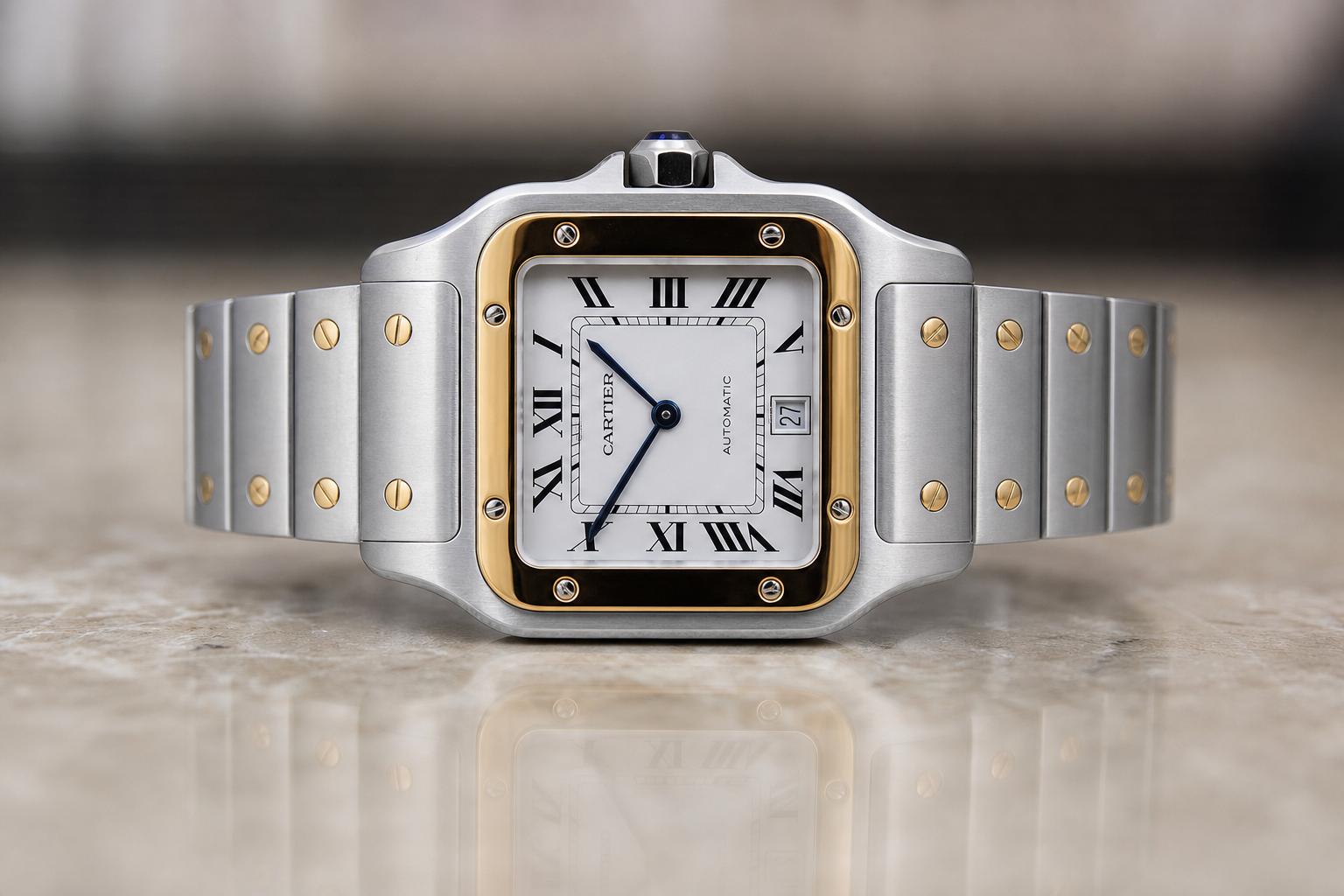
The Cartier Santos is one of those rare watches that make you feel connected to something bigger the moment you strap it on. It’s a square case with a century of aviation history behind it. It’s a bracelet with screws that look like rivets from an early aircraft. It’s also, very practically, a watch that just works for Canadian daily life—whether your commute runs through the PATH in Toronto or along Burrard Street in Vancouver. If you’re curious about the Cartier Santos, comparing models, or trying to decide where and how to buy one in Canada, this in-depth guide lays it out clearly. You’ll learn the history and the models (Santos de Cartier, Santos-Dumont, chronograph, skeleton), how they wear, what movements live inside, how prices and taxes work in Canada, where to shop safely, and how to care for yours so it looks good decades from now.
Why the Cartier Santos Matters: A Brief Origin Story with Lasting Impact
In 1904, Louis Cartier designed a wristwatch for his friend Alberto Santos-Dumont, a Brazilian-born aviator flying experimental machines over Paris. The request was simple: a watch he could consult at a glance mid-flight, without fishing a pocket watch from a vest. The result was a square-cased wristwatch with visible screws and broad Roman numerals—unapologetically modern in an era of delicate pocket watches. Few designs stay relevant for more than a century; the Santos has not only survived, it has kept its identity intact while evolving to suit new wrists.
For Canadian buyers today, that heritage matters. It explains why the Santos looks the way it does. The square shape wasn’t an aesthetic whim; it was meant to be easily read and firmly strapped to the wrist. The screws you see aren’t gratuitous—they echo machine-age honesty. When you buy a Santos, you’re not just getting a pretty face. You’re stepping into a design that helped normalize the men’s wristwatch itself.
Understanding the Family: Santos de Cartier vs. Santos-Dumont and More
The “Cartier Santos” name covers a few distinct models. They share the same DNA—square case, Roman numerals, a rail-track minute ring—but they feel different on the wrist and fit different needs. Here’s how to think about the line-up at a glance before we go deeper.
Santos de Cartier (the modern daily driver)
The Santos de Cartier is the contemporary automatic model most people imagine: screw-adorned bezel, integrated bracelet with quick-change system, and robust water resistance. It’s the most versatile choice if you want one watch to do it all—office, weekends, travel, even a quick swim. The 2018 refresh added clever bracelet technology (QuickSwitch and SmartLink) and the in-house 1847 MC automatic movement with anti-magnetic tech.
Cartier Santos-Dumont (the dress-forward classic)
The Santos-Dumont retains the original’s elegance in a thinner, dressier form. You’ll typically see it on leather with a slim polished case, often in small, large, or XL sizes. The small and large usually run quartz movements for ultra-slim comfort; the XL uses a manual-wind calibre for enthusiasts who enjoy the ritual. Water resistance is modest. This is the one for tuxedo nights, café tables, and anyone who loves understatement.
Santos de Cartier Chronograph
The chronograph keeps the Santos silhouette but adds a stopwatch function and a unique pusher layout that preserves the clean case lines. It’s bigger and sportier, with an integrated strap/bracelet system and an automatic chronograph movement designed for regular use.
Santos Skeleton
If you want drama, the Santos Skeleton shows off a hand-finished movement where the bridges form the Roman numerals themselves. It’s a technical showpiece with modern flair, often in larger cases and precious metals or ADLC-treated steel. Less practical, more art-on-the-wrist.
Legacy Models You’ll See Pre-Owned: Santos Galbée and Santos 100
Before the 2018 redesign, Cartier produced the Santos Galbée—curvier, often slimmer—and the bold Santos 100 released for the centenary. Both remain popular in Canada’s pre-owned market. If you’re hunting value, they’re worth a look, but they don’t have today’s QuickSwitch/SmartLink features.
Design DNA: What Makes a Cartier Santos Look and Wear the Way It Does
Square watches wear differently from round ones. The Santos telegraphs confidence without shouting. The stepped bezel frames the dial; the screws give texture; the curve of the lugs makes it hug the wrist. That combination is why the Santos “disappears” under a cuff yet never looks timid when the sleeve rides up on the subway.
Dial choices usually include silvered opaline with black Roman numerals (classic Cartier), sunburst blues and greens on modern references, and, in some limited editions, lacquered hues on Santos-Dumont models. The sword hands are legible, and the chemin-de-fer minute track keeps everything orderly at a glance. Unlike many square watches that can feel boxy, the Santos case is subtly cambered, as is the bracelet, so it wraps, not perches.
Bracelet and Strap System: QuickSwitch and SmartLink
Two things turn the Santos de Cartier into a true daily companion in Canadian life where seasons change quickly: QuickSwitch and SmartLink. QuickSwitch lets you press a hidden tab on the underside of the case to swap between bracelet and strap in seconds, no tools required. It’s not a gimmick—you’ll appreciate it when winter hits and you want to run leather under a parka cuff, or summer returns and the steel bracelet feels right again.
SmartLink lets you size the bracelet yourself by pressing discreet buttons on select links to release the bar. It saves a trip to the boutique for minor adjustments, which is handy if you’re far from a Cartier store or simply want to fine-tune the fit after a warm afternoon on the Halifax waterfront. Cartier typically includes a leather strap and folding clasp with many Santos de Cartier configurations, effectively giving you two watches in one box.
Material Options and What They Mean Day to Day
Steel is the workhorse and, frankly, the sweet spot for most buyers. Two-tone steel and gold adds warmth and vintage charm; it dresses up easily without losing practicality. Solid gold versions turn the luxury up and the weight down your wrist—gorgeous, but pricier to insure and a touch more conspicuous in big Canadian cities where watch theft has made occasional headlines. ADLC-coated bezels and cases (a type of durable black coating) give the Santos a stealthier, sportier feel and hide scratches better than polished steel.
Sizes and Fit: Picking What Works for Your Wrist
Square watches read larger than their measurement suggests because there’s more dial across the wrist. The Santos de Cartier typically comes in Medium and Large. The Medium is thinner and omits a date; the Large adds a date at 6 o’clock and presents a little more presence. For many Canadian buyers with a wrist around 6 to 6.75 inches (roughly 15–17 cm), the Medium looks balanced and classic. If you prefer bold or your wrist is 7 inches (18 cm) and up, the Large often feels right.
The Santos-Dumont sizing works differently: small and large quartz models wear very slim and elegant; the XL manual-wind brings a bit more dial but stays refined. Try them on if you can; the curvature and square footprint make paper specs less useful than a five-minute wrist test in a boutique in Toronto, Montreal, or Vancouver.
Movements and Technical Details: What’s Inside and Why It Matters
Cartier has invested heavily in practical, reliable movements for the Santos de Cartier. The in-house 1847 MC automatic powers most three-hand models. It uses anti-magnetic components (including nickel-phosphorus elements) and shielding so it resists the magnetic fields that live in Canadian daily life—bag clasps, laptop cases, wireless chargers. It’s not a laboratory queen; it’s meant to run steadily, be easy to service, and shrug off the modern world.
The Santos-Dumont story splits: small and large cases use quartz movements for slimness and convenience; the XL runs a manual-wind calibre (often referred to as 430 MC in recent years) based on a proven ultra-thin architecture. If you don’t want to think about winding, quartz makes sense and keeps the case razor-thin. If you enjoy interaction and tradition, the hand-wound XL feels special.
Chronograph and Skeleton Calibres
The Santos de Cartier Chronograph uses an automatic chronograph calibre that keeps the case lines clean by moving functions away from the usual pusher spots; it’s designed for dependable everyday timing. The Santos Skeleton carries a hand-wound calibre where movement bridges shape the Roman numerals. It’s a demonstration of Cartier’s design-meets-engineering philosophy. Both are higher up the price ladder.
Water Resistance, Anti-Magnetism, and Real-World Robustness
Water resistance on Santos de Cartier models is generally strong for a luxury piece—sufficient for hand-washing, rain, and a casual swim. The Santos-Dumont is more delicate and typically not suited for water beyond incidental splashes. Either way, check the specific reference details and keep leather away from water and slush. For magnetism: while 1847 MC offers meaningful resistance, a strong speaker magnet or a phone case with a powerful clasp can still cause issues. If your watch starts running wildly fast or slow, demagnetization is a quick fix at service.
Prices in Canada: What to Expect and How to Budget
MSRPs fluctuate with exchange rates and brand pricing cycles, so use these as typical ranges and confirm with a Canadian boutique or authorized dealer. As a broad guide for new pieces at the time of writing:
- Santos de Cartier Medium in steel: roughly in the low CAD five-figure range.
- Santos de Cartier Large in steel: a bit higher than the Medium, still around the low-to-mid CAD five figures.
- Two-tone steel and gold Santos de Cartier: mid-to-upper CAD teens depending on configuration.
- Solid gold Santos de Cartier: often well into the CAD thirty-thousand-plus territory.
- Santos-Dumont small/large (quartz): typically mid-to-upper CAD four figures to low five figures depending on metal.
- Santos-Dumont XL (manual wind): low-to-mid CAD five figures, with special lacquer or precious-metal editions higher.
- Santos de Cartier Chronograph in steel: generally mid CAD five figures.
- Santos Skeleton: significantly higher, frequently in the CAD thirty-to-fifty-thousand bracket depending on metal and edition.
Taxes matter, and in Canada they add up. Expect to pay GST/HST or GST plus provincial tax depending on your province. Ontario, for example, uses a 13% HST. Quebec applies 5% GST plus 9.975% QST. British Columbia adds 7% PST atop the 5% GST. The sticker price is just the start; plan for tax in your budget.
Where to Buy in Canada: Boutiques, Authorized Dealers, and the Pre-Owned Route
The safest route for a new Cartier Santos is through a Cartier boutique or an authorized dealer. Canada has Cartier boutiques in major cities and a network of authorized partners across the country. Maison Birks, for instance, is a well-known authorized retailer with locations in several provinces, and there are reputable independents in major urban centres. Use Cartier’s official store locator to verify a retailer’s status; it takes seconds and protects you from warranty headaches later.
What about negotiating? Cartier typically maintains tight control over pricing. You’re unlikely to see overt discounting at a boutique. That said, authorized dealers sometimes offer small considerations—strap swaps, expedited bracelet sizing, or, occasionally, minor flexibility around accessories. Financing plans exist at some retailers in Canada; if that’s important to you, ask discreetly rather than expecting it as standard.
Pre-Owned and Vintage in Canada
Pre-owned Santos models can offer value, especially older Santos Galbée or Santos 100 references. The Canadian Watch Collector forum, reputable local dealers in Toronto, Vancouver, and Montreal, and established auction houses like Dupuis Auctioneers or Waddington’s periodically list Cartier pieces. If you’re browsing cross-border or international platforms, remember that CBSA will assess taxes and possibly duties on import. For watches shipped into Canada, the carrier may collect on delivery; budget accordingly.
Due diligence is non-negotiable. Ask for clear photos of the dial, caseback, movement (when feasible), serial, and bracelet. Check that the crown has the correct blue cabochon or spinel, fonts are clean, the date is centered (on Large models), and printing is crisp. Box and papers help with resale and provenance, but service history from Cartier or a known watchmaker is often more valuable than a pretty outer box. If you’re uncertain, pay for a third-party authentication or plan to have the piece examined at a Cartier boutique before the return window closes.
Canadian Taxes, Duties, and Cross-Border Shopping: Avoid Surprises
Buying a Cartier Santos outside Canada to save a bit? Do the math first. When you return, you must declare the watch. Depending on how long you were away, personal exemptions may reduce what you owe, but in many cases you’ll still pay GST/HST (or GST + PST/QST) and potentially duties, collected by the Canada Border Services Agency. Even if the boutique abroad removes VAT, the Canadian side can erase any expected savings. And if you’re thinking about skipping declaration—don’t. It risks seizure and penalties, and it’s simply not worth it.
If you’re shipping a watch into Canada from a foreign seller, expect the courier to clear it through customs and bill you for taxes and any applicable duties before or on delivery. Factor those costs into your total budget, and confirm in writing who pays return shipping and taxes if you need to send it back.
How to Choose Your Cartier Santos: A Practical, No-Nonsense Framework
Let’s cut to the chase. You like the look. Which one should you buy?
- If you want one watch to wear daily—office, weekends, occasional swim—start with the Santos de Cartier in steel. Pick Medium if you want thinner and no date; choose Large if you want a date and a touch more presence.
- If you love formal wear, slim cuffs, and the ritual of dressing well, the Santos-Dumont is a quietly charismatic choice. Choose quartz in small/large if you want set-and-forget slimness; choose the XL manual if you enjoy winding and a bit more wrist presence.
- If you time workouts or cook by instinct and want a stopwatch, look at the Santos de Cartier Chronograph. It’s big, bold, and fun to use.
- If you see watches as wearable art, the Santos Skeleton will stop you in your tracks. It’s less about daily knocks, more about admiration and conversation.
Material choice? In Canada’s varied light, steel looks sharp year-round. Two-tone warms up winter palettes and looks terrific with navy suits; yellow gold is pure glamour and reads luxury from across a room. If scratches make you anxious, consider ADLC-bezel or brushed-finish variants that hide marks better than mirror-polished bezels.
Comfort and Everyday Practicalities for Canadian Life
Watches in Canada meet winter before anything else. Leather straps can dry and crack if you wear them on salty sidewalks and then blast them with indoor heating. Keep a dab of leather conditioner handy, rotate to the bracelet in slushy months, and wipe down the case and bracelet after snowy days. The Santos de Cartier bracelet’s SmartLink helps you adjust for winter-summer wrist changes without a boutique visit.
Public transit and city life bring bumps and scrapes. The Santos bezel is easier to polish than you think, but don’t refinish it frequently—over-polishing rounds crisp edges. A light touch every few years at service is enough. If you cycle along Montreal’s streets or ski in Banff, the watch can come, but be sensible. Metal bracelets handle sweat and moisture better than leather.
Cartier Care and Warranty: What Canadians Should Know
Cartier’s international warranty covers manufacturing defects and, when you register your watch with Cartier Care, you can qualify for an extended coverage period beyond the standard term. Registration is quick online. Keep your sales receipt, warranty card, and any service documents together; your insurer will want them, and so will any future buyer.
Service through Cartier boutiques and authorized service centres in Canada is straightforward. A routine service for an automatic Santos typically includes movement overhaul, gaskets, water-resistance tests, and light refinishing. Quartz Santos-Dumont models require battery service and periodic seals. Turnaround times vary; plan on several weeks for standard jobs and longer for vintage restorations. Pricing depends on the model and scope, but budgeting several hundred dollars for quartz maintenance and north of that for mechanical overhauls is sensible. Get a written estimate before approving work.
Authentication and Counterfeits: Red Flags and Safe Habits
The Santos is a target for counterfeiters. A few grounding principles help:
- Buy from a Cartier boutique or authorized dealer whenever possible. That single decision solves 95% of problems.
- If buying pre-owned, insist on clear macro photos of the dial print, the alignment of numerals and minute track, the crown cabochon, and case engravings. Sloppy fonts and uneven spacing are common tells.
- Check the feel of the bracelet and clasp. Cartier bracelets articulate smoothly and feel dense; gritty, stiff links are a warning sign.
- Ask for serials and, if the seller allows, verify with a boutique that the serial format aligns with Cartier norms. Boutiques won’t always disclose history but can spot glaring issues.
- Be wary of “too good to be true” pricing, especially from sellers unwilling to meet at a secure, well-lit location or provide references.
Style Notes: How Canadians Are Wearing the Santos Now
In Toronto’s financial district, a steel Santos de Cartier on bracelet pairs neatly with navy suits and white shirts, especially in Medium size without a date. In Vancouver and Victoria, the Large with a blue dial and leather strap reads more relaxed with knit polos and tailored chinos. Montreal tends to embrace bolder looks—two-tone steel and yellow gold with a charcoal suit, or a Santos-Dumont on a rich burgundy strap against a black turtleneck in winter. The square case brings a touch of art deco to modern wardrobes; it rarely clashes with anything except extremely rugged workwear.
Women wear the Santos beautifully. The Medium Santos de Cartier lands in a sweet unisex zone, and the small Santos-Dumont on leather is wonderfully elegant. Because the design is symmetrical and the lugs taper neatly, the watch looks balanced on a wide range of wrists.
Comparisons: Santos vs. Tank, Datejust, and Integrated-Bracelet Rivals
If you’re cross-shopping, a few comparisons help sharpen preferences:
- Cartier Santos vs. Cartier Tank: The Tank is purer formalism; it’s dress-first and often slimmer. The Santos is more versatile, with stronger water resistance, a sportier bracelet, and a more casual vibe when needed.
- Cartier Santos vs. Rolex Datejust: The Datejust is the benchmark round all-occasion watch with superb robustness and resale. The Santos counters with design history, a sleeker profile, and a standout bracelet system. If you value originality and the square silhouette, the Santos wins easily; if you want ubiquity and bulletproof after-sales networks, the Datejust might edge it.
- Cartier Santos vs. integrated-bracelet icons: Compared to the Royal Oak or Nautilus, the Santos is far easier to buy at retail in Canada, costs significantly less, and avoids waitlist games. It’s also less fragile in daily wear and less risky to flash in public.
Value and Resale in Canada: What Reality Looks Like
Buy what you love, then treat any retained value as a pleasant surprise. The Santos de Cartier in steel tends to hold value reasonably well among luxury watches, partly because it’s widely appreciated and easy to wear. Two-tone and solid gold depend more on fashion cycles. Limited editions (for example, certain lacquered Santos-Dumont models) can command premiums if demand is strong.
In Canada’s pre-owned ecosystem, you’ll see Santos prices track the US and global market with exchange-rate adjustments. If you keep your set complete—box, papers, spare strap—and service at Cartier, you’ll have an easier sale later. But don’t buy a watch as an “investment.” Buy it because you smile when you check the time.
Ownership Tips That Actually Help
- Register with Cartier Care right after purchase to access the extended warranty benefits.
- Keep the QuickSwitch mechanism clean. When swapping straps, wipe the recess gently; a soft brush dislodges lint.
- If you wear the watch daily, have water resistance tested every one to two years, especially before vacations involving pools or the ocean.
- Rotate leather straps. In Canada’s winters, they dry faster. Condition sparingly every few months and keep them away from radiators.
- Avoid DIY polishing. Micro-scratches are normal. Over-polishing kills edges and value.
- Store the watch in a dry, padded spot. A small silica gel pack in the drawer helps during damp coastal months.
- If you use a watch winder, choose a gentle program. The 1847 MC doesn’t need aggressive winding cycles to stay topped up.
Insurance and Appraisals in Canada
Insuring your Cartier Santos is straightforward. Many Canadian home insurance providers offer scheduled personal property riders for watches. Alternatively, specialized jewellery insurers operate in Canada and can cover loss, theft, or damage worldwide. You’ll typically need a receipt or appraisal with photos and the serial number. If you buy pre-owned, request a current appraisal from a qualified watch appraiser in your city; it helps with both insurance and future resale.
Keep digital copies of your documents off-site—cloud storage or a secure drive. If you ever move provinces, notify your insurer; policy terms and deductibles vary across Canada.
Travelling with a Santos: Airports, Hotels, and CITES Notes
Air travel with a Santos is simple: it can go through metal detectors, and it doesn’t mind cabin pressure. If your Santos-Dumont has an alligator or crocodile strap and you’re crossing international borders, be aware of CITES regulations on exotic leathers. Most personal-use scenarios pass without issue, but to avoid awkward conversations, keep proof of purchase or consider swapping to a calfskin strap for international trips. When you check into hotels, use the in-room safe or front desk safe if you’re leaving the watch behind. Don’t leave it on a nightstand near an open window in summer—temptation is a poor security plan.
Maintenance Intervals and What to Expect from Service
Mechanical Santos watches generally benefit from a full service every five to seven years, depending on wear, environment, and timekeeping. Quartz Santos-Dumont pieces need fresh batteries every couple of years and seal checks to maintain splash resistance. A full service includes disassembly, cleaning, lubrication, reassembly, regulation, and pressure testing. Cartier will typically refinish the case and bracelet lightly unless you request otherwise. If you love patina, say so; once metal is taken off, it’s not coming back.
In Canada, you’ll interface through a Cartier boutique or an authorized retailer, who will ship the watch to a service centre. Expect communication at approval and completion, plus a service warranty on the work performed. If you’ve modified the watch with aftermarket diamonds or non-Cartier parts, be prepared for service refusal or parts replacement to restore factory spec.
Common Myths and Mistakes
- “Square watches don’t fit small wrists.” The Santos case is curved; the Medium often fits wrists down to about 6 inches comfortably. Try before you decide.
- “You can’t swim with a Santos.” The Santos de Cartier is built for daily life, including a pool. Confirm your model’s rating and avoid leather straps in water.
- “All Santos-Dumont are mechanical.” Many are quartz by design, to keep them ultra-thin. That’s not a downgrade; it’s a choice driven by elegance.
- “Grey-market new watches have the same warranty.” Unless the warranty card is stamped by an authorized dealer and properly dated, Cartier may not honour it. Ask to see the card.
- “Polish every scratch right away.” Resist the urge. Refinishing is a finite resource. Live with light marks; service later.
At-a-Glance Reference: Santos Models and Typical Traits
| Model | Typical Sizes | Movement | Water Resistance | Best For |
|---|---|---|---|---|
| Santos de Cartier (3-hand) | Medium, Large | Automatic 1847 MC | Strong daily rating (suitable for swims; confirm spec) | All-occasion daily wear |
| Santos-Dumont | Small, Large (quartz); XL (manual) | Quartz or manual-wind | Modest (splash only) | Dress-forward elegance |
| Santos de Cartier Chronograph | Large/XL | Automatic chronograph | Sport-capable | Timing tasks, bold presence |
| Santos Skeleton | Large/XL | Hand-wound skeleton | Varies by model | Statement piece |
Real Canadian Scenarios: What to Choose and Why
Scenario 1: First Luxury Watch, Toronto Professional
You want something credible, not loud, to wear in a conservative office and out to dinner. Choose a Santos de Cartier Medium in steel on bracelet. Add a dark brown or navy leather strap for winter. It slides under a cuff, looks sharp with a blazer, and lets you swim on vacation without worry.
Scenario 2: Montreal Creative, Dress Leaning
You prefer sleek lines, slimmer watches, and bolder colours. The Santos-Dumont large in steel with a lacquered dial from a recent season, or classic silvered dial with a colourful strap, nails it. It reads sophisticated and pairs with tailored knitwear and minimalist sneakers.
Scenario 3: Vancouver Weekender Who Hikes
You want a watch for city weekdays and seawall weekends. The Santos de Cartier Large with an ADLC bezel handles scratches better. Keep the bracelet for summer and switch to a rubber or calf strap for rain. Confirm water resistance before plunging into English Bay.
Scenario 4: Enthusiast with a Rotation
You already own a dive watch and a chrono. The Santos Skeleton in steel or a Santos-Dumont XL manual-wind adds artistry and heritage to your box. It won’t compete with your tool watch; it’ll complement it by doing something only Cartier does.
Sustainability, Sourcing, and Ethics
Cartier, as part of Richemont, participates in industry initiatives for responsible sourcing and is a member of organizations that set standards for precious metals and ethical supply chains. “Swiss Made” on the dial reflects manufacturing and quality standards, and Cartier communicates about responsible gold sourcing and traceability. For straps, exotic leathers involve international regulations; suppliers must follow CITES rules, which is why your boutique may advise on documentation for cross-border travel or offer non-exotic alternatives.
Glossary: Quick Terms You’ll See While Researching
- Santos de Cartier: The modern, water-resistant, automatic line with bracelet tech.
- Cartier Santos-Dumont: The slimmer, dressier line, often quartz (small/large) or hand-wound (XL).
- 1847 MC: Cartier’s in-house automatic calibre used in many Santos de Cartier models.
- QuickSwitch: Tool-free system to swap between bracelet and straps.
- SmartLink: Tool-free bracelet sizing for select links.
- ADLC: Amorphous diamond-like carbon coating that adds scratch resistance and a dark finish.
- Cartier Care: Program for registering your watch to access extended warranty and services.
Frequently Asked Questions
Is the Cartier Santos a good daily watch in Canada?
Yes. The Santos de Cartier is built for everyday wear with solid water resistance, an anti-magnetic movement, and a comfortable bracelet. It transitions well from office to weekend. The Santos-Dumont is better as a dress or light-duty daily if you avoid water and treat the leather kindly.
How much does a Cartier Santos cost in Canada after tax?
It depends on the model and your province. A steel Santos de Cartier typically lands in the low-to-mid five figures before tax. Add your local GST/HST or GST plus provincial tax to estimate the out-the-door number. In Ontario, for example, a CAD 10,500 watch becomes about CAD 11,865 with 13% HST.
Where can I buy a Cartier Santos in Toronto, Vancouver, or Montreal?
Start with Cartier boutiques and the official store locator. Maison Birks and other authorized jewellers also carry Cartier watches in major Canadian cities. Verify “authorized” status on Cartier’s website to ensure you receive a valid international warranty.
Can I swim with a Santos?
With the Santos de Cartier, yes—assuming your specific model lists appropriate water resistance and the crown is properly secured. Avoid swimming with a leather strap. The Santos-Dumont is generally not designed for swimming; treat it as splash-resistant at most.
What’s the difference between the Santos de Cartier Medium and Large?
The Medium is slimmer and omits a date, giving a cleaner dial. The Large has a date at 6 o’clock and wears a bit more prominently. Both share the same design language, QuickSwitch and SmartLink features, and 1847 MC automatic movement.
Is the quartz Santos-Dumont “lesser” than the mechanical versions?
No. Quartz in the Santos-Dumont keeps the case exceptionally thin and the watch worry-free, which aligns with the model’s dressy purpose. If you want a mechanical experience, the XL manual-wind offers that without compromising elegance.
How does the Cartier warranty work in Canada?
You receive an international warranty that covers manufacturing defects. Register your watch with Cartier Care to access extended coverage beyond the standard term. Service and support can be arranged through Canadian boutiques and authorized dealers.
How often should I service my Cartier Santos?
Mechanical models typically need a full service every five to seven years, depending on usage and performance. Quartz Santos-Dumont pieces require battery replacements and periodic seal checks. Always have water resistance tested before water exposure if the watch has been opened or is older.
Will I pay duties if I buy a Cartier Santos abroad and bring it back to Canada?
Likely you’ll pay taxes and possibly duties, assessed by CBSA upon entry. Personal exemptions depend on how long you were away. Declare honestly; failing to do so risks penalties and seizure. If you have a VAT refund paperwork from abroad, remember that Canadian taxes can offset those savings.
How do I spot a fake Cartier Santos?
Look for crisp printing, clean alignment of Roman numerals, correct crown cabochon, precise case engravings, and a bracelet that feels smooth and solid. The QuickSwitch and SmartLink systems should operate cleanly. When in doubt, buy from an authorized retailer or pay for professional authentication.
Does the Santos hold its value?
The Santos de Cartier in steel tends to retain value relatively well among luxury watches, though results vary by reference and market conditions. Buy for enjoyment first. Keep box, papers, and service records to help future resale.
What about strap options in Canada?
Cartier offers leather, rubber, and bracelet options compatible with QuickSwitch. Third-party strapmakers also produce QuickSwitch-compatible straps. If you’re in a smaller city, ordering through a boutique or authorized dealer is straightforward, and shipping is quick within Canada.
Is the Santos comfortable on small wrists?
Yes. The case curvature helps it wear smaller than it looks, and the Medium is a popular unisex fit. Try it on; square watches are hard to judge from photos.
Should I polish my Santos regularly?
No. Light refinishing during scheduled service is enough. Frequent polishing rounds edges and removes metal. Embrace minor marks as a record of your life with the watch.
Final Thought
The Cartier Santos balances history and modern practicality in a way few luxury watches do. It’s coherent—square because it should be, elegant because it wants to be, and tough enough for Canadian weather and pace. Choose the version that fits your rhythm, buy it the right way, and take care of it. Years from now, you’ll glance at the dial and be reminded that good design—not hype—always endures.