
Bosch Dishwasher: The Complete Canadian Buying, Installation, and Care Guide
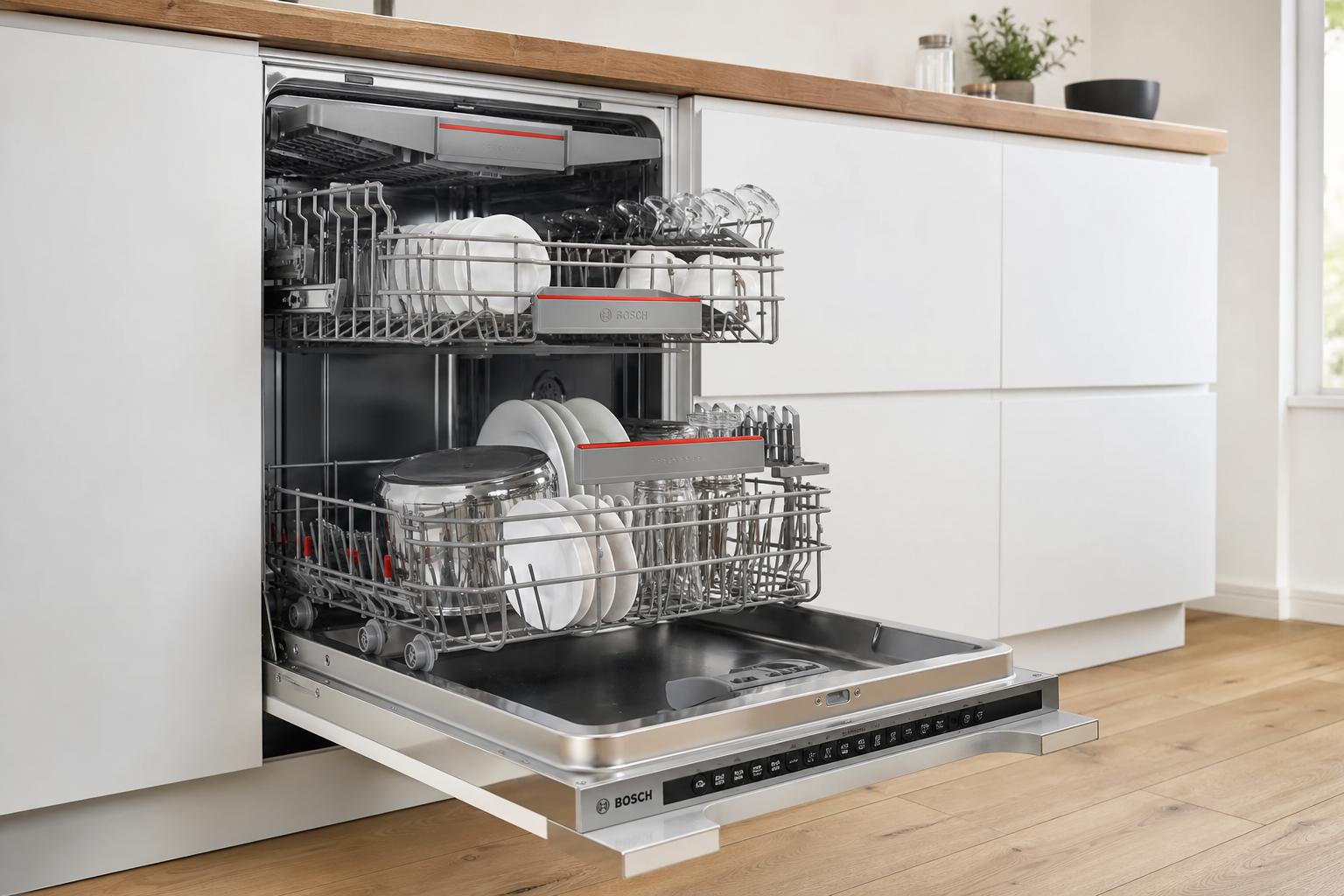
Shopping for a new Bosch dishwasher in Canada can feel like standing in front of a quiet, gleaming wall of stainless steel and trying to read its mind. Every model promises spotless dishes and hushed performance. The price tags run from “not bad” to “am I adopting this thing?” And then there’s the jargon—CrystalDry, AutoAir, dBA, RackMatic—terms that sound impressive but don’t explain themselves. If that’s where you’re at, you’re in the right place.
This guide cuts through the noise (ironically, Bosch is famous for reducing it) and gives you what you actually need to choose well, install safely, and keep your machine running for years in Canadian homes—condos in Toronto, farmhouses in the Prairies, mountain townhouses in Canmore, and everything in between. We’ll decode the Bosch series lineup, explain features in plain language, share Canadian pricing and retailer tips, walk you through installation notes that align with our electrical and plumbing norms, and cover real-world maintenance and troubleshooting that saves time and money.
Along the way, you’ll find practical examples—how Bosch handles hard water in Calgary versus soft water in Vancouver, what silence ratings mean in an open-concept condo, and how to pick between a 24-inch and an 18-inch model without guessing. You’ll finish with a clear short list, a firm handle on costs, and confidence about what happens after delivery. Let’s get you to the right Bosch dishwasher without second-guessing or surprises.
Why Canadians Gravitate to a Bosch Dishwasher
Ask around and a few themes keep coming up: quiet, clean, reliable. Bosch dishwashers built their reputation in Canada by tackling open-concept kitchens head-on. When you host, you can actually run a cycle without talking over it. That matters when your living room is six steps away. It also helps that Bosch models are consistently ENERGY STAR certified, sip water compared to handwashing, and are broadly available nationwide at major retailers and independent appliance shops with solid service networks.
Reliability is the other draw. Bosch embraced stainless-steel tubs across most of its lineup (with a hybrid tub in some entry models), refined filtration instead of grinders (quieter, fewer moving parts), and built in leak protection with AquaStop. The result: dishwashers that tend to age gracefully if you keep up with simple maintenance like filter cleaning and rinse aid. In a climate where winter road salt and cooking hearty meals can add up to heavy washing loads, this kind of steady performance isn’t just nice—it’s sanity-saving.
Finally, Bosch’s series roadmap actually makes sense once you know the basics. As you move up—from 100 to 300 to 500 to 800 and then Benchmark—you gain lower noise, better drying, more flexible racks, and extra smart features. You don’t have to guess what you’re paying for, and that transparency makes comparing models easier.
The Bosch Dishwasher Series in Canada, Explained
Bosch sorts its built-in dishwashers into a few clear families. The model number usually starts with “SHE,” “SHS,” “SHPM,” “SHXM,” or “SHV” (panel-ready) followed by a series digit (1, 3, 5, 8) or “Benchmark,” then a handful of letters and numbers for finish and handle style. Below is how the families differ in ways you can actually feel day to day.
100 Series: Entry-Level, Bosch Quiet
The 100 Series is Bosch’s doorway into the brand. You’ll typically see noise ratings around 48–50 dBA, a hybrid tub (stainless walls with a durable polymer base), and a good selection of cycles: Auto, Normal, Heavy, and a quick cycle such as Speed60. Many 100 Series models add Bosch’s celebrated third rack—great for cutlery, spatulas, and espresso cups—though not always standard. Drying is pure condensation: hot final rinse plus stainless walls that pull moisture off dishes. It works well for glass and ceramic; plastics may need a towel at the end.
Who it’s for: budget-conscious buyers who still want quiet operation versus basic builder-grade units. In small homes or closed kitchens, 100 Series can be enough. In an open-plan space with movie night nearby, you might want to step up to 300 or 500.
300 Series: The Sweet Spot for Most Homes
Here’s where the value sweet spot lives for many Canadians. Noise often drops to the mid-40s dBA (around 44–46), the third rack becomes common, and you get RackMatic—Bosch’s adjustable middle rack with three height levels and multiple tilt positions. The tub is stainless steel, which helps with drying and long-term durability. If you’re replacing a 15-year-old unit, the 300 Series is the easiest place to land without overspending.
Who it’s for: most families, especially in semi-open kitchens. For the price, the combo of quiet, flexibility, and sturdy build often outperforms similarly priced competitors.
500 Series: AutoAir and Polished Convenience
The 500 Series introduces AutoAir: at the end of the cycle, the door automatically pops open to let humid air escape and cool, dry air in. It’s a simple trick that makes a visible difference for plastics and light items. Noise is usually mid-40s dBA or better. If your kitchen has busy mornings and you don’t want to wipe anything, AutoAir is worth it.
Who it’s for: households where plastic containers and kid dishes are daily realities, and anyone who appreciates dry dishes without fiddling.
800 Series: CrystalDry and Luxury-Level Quiet
Most Bosch 800 Series models feature CrystalDry, a technology that uses a natural mineral (zeolite) to absorb moisture and release heat during the dry phase. The short version: it dries plastics better than condensation alone, no electric heating element, and without warping. You’ll also see some of Bosch’s quietest ratings here—commonly 39–42 dBA—and premium rack systems with flexible tines and a more usable top third rack. The look and feel step up too, with pocket or bar handles and sleek top controls.
Who it’s for: open-concept spaces where you want library-level quiet, frequent plastic loads, and the most consistent drying without cracking the door manually.
Benchmark: Top-Tier Performance and Panel-Ready Options
Benchmark is Bosch’s flagship. Expect the hush (often 38–39 dBA), robust CrystalDry performance, and the most refined racks and hinges. Panel-ready (custom cabinet front) models are common here, especially if you want a seamless, integrated kitchen in a Toronto loft or a Vancouver build. Benchmark models can also include TimeLight—projecting the remaining cycle time on the floor—useful when you can’t see the control panel on an integrated front.
Who it’s for: design-forward renovations, luxury builds, and anyone who wants a fully integrated, panel-ready dishwasher that disappears into the millwork while cleaning like a champ.
Table: Quick Comparison of Bosch Dishwasher Series
| Series | Typical Noise (dBA) | Drying Tech | Racks | Best For |
|---|---|---|---|---|
| 100 | 48–50 | Condensation | 2–3 racks (varies) | Budget, closed kitchens |
| 300 | 44–46 | Condensation | RackMatic + 3rd rack common | Most families, best value |
| 500 | 44–45 | AutoAir (door pops) | RackMatic + flexible tines | Better plastic drying |
| 800 | 39–42 | CrystalDry | Premium 3rd rack, fold-down tines | Quietest, best drying |
| Benchmark | ~39 | CrystalDry | Top-tier flexibility | Panel-ready, luxury builds |
Sizes, Styles, and Finishes That Fit Canadian Kitchens
Most Bosch dishwashers sold in Canada are 24-inch built-in units designed for a standard 24-inch cabinet opening. If you live in a condo or need to squeeze into a tight galley, Bosch also offers 18-inch models with similar feature sets. Here’s how to match your space to the right format.
24-Inch vs 18-Inch Bosch Dishwashers
A 24-inch Bosch dishwasher fits the majority of Canadian kitchens built in the last few decades, including standard IKEA, Home Depot Canada, and custom kitchens. The typical cutout height is about 34.5 inches (876 mm). Bosch units are adjustable to fine-tune the height during installation. Depth usually sits around 23.75 inches, plus a touch more for hoses and the electrical connection. If you’re in a Toronto or Vancouver condo with a compact plan—or you rarely cook—an 18-inch Bosch can be perfect. Capacity drops, of course, but so does the footprint. Look for the same noise and drying features scaled down.
Handle Styles and Controls
You’ll see two broad looks: bar-handle (a visible horizontal handle with top controls) and pocket-handle (a recessed grip with top controls). With panel-ready models, the controls sit on top and the front matches your cabinetry. If you cook often and wipe surfaces aggressively, pocket handles can hide smudges a bit better. If you prefer a classic pro look, the bar handle is timeless.
Finishes
Stainless steel leads the pack for Bosch, including fingerprint-resistant coatings on many models. Black stainless is available in select lines for a moodier palette. Panel-ready is the design-forward choice, common in 800 and Benchmark models, where your cabinet maker fits a matching door panel—usually 3/4-inch thick—onto the dishwasher. Check the maximum panel weight and handle compatibility in the installation manual so the door balance is perfect.
Key Bosch Features, Decoded (No Hype, Just What Matters)
Silence Ratings (dBA): What Do Those Numbers Mean?
Bosch lists sound levels in dBA. Lower is quieter. Every drop of roughly 3 dBA represents a halving of sound energy. That doesn’t mean it sounds half as loud to your ears, but it’s a noticeable step down. To ground it: 50 dBA is a quiet conversation. 42 dBA is library-soft. Around 39 dBA, you may find yourself staring at the control light to confirm it’s actually running. If you live in an open-concept space or have a baby’s room beside the kitchen, a 42 dBA or lower Bosch dishwasher can be a quality-of-life upgrade.
RackMatic and the Third Rack
RackMatic lets you raise or lower the middle rack with one hand—even when it’s loaded. You get three height levels and multiple tilt positions, which means you can slide in tall stemware one day and a stock pot the next. Bosch’s third rack (the topmost shallow tray) frees up the cutlery basket space in the bottom rack and adds a home for awkward tools like whisks and spatulas. Once you’ve lived with it, going back feels like giving up a kitchen drawer.
Drying: Condensation, AutoAir, and CrystalDry
All Bosch dishwashers use condensation drying: a hot final rinse makes dishes hot; water transfers to the cooler steel walls and drips away. It’s energy-efficient and gentle, but plastics don’t hold heat as well, so they stay wetter. AutoAir (500 Series) cracks the door at the end, venting steam. It’s surprisingly effective with Tupperware and sippy cups. CrystalDry (800 and Benchmark) adds zeolite, a mineral that absorbs moisture and releases heat, supercharging the final dry. It’s safe for plastics and avoids the scorched edges you sometimes see with exposed heating elements on other brands.
AquaStop Leak Protection
Think of AquaStop as a multi-layer leak bodyguard: a reinforced inlet hose, internal sensors, and a safety pan. If the system detects a leak, it can shut the water off and prevent flooding. If your dishwasher shares a wall with a finished basement in Ottawa or sits over expensive hardwood in Halifax, that extra peace of mind is not trivial. It also helps with condo insurance requirements, since many strata councils in British Columbia and Ontario prefer appliances with built-in leak safeguards.
Sanitize Option and NSF Certification
Many Bosch models offer a Sanitize option that raises the final rinse temperature to help reduce bacteria on dishes and baby items. Look for NSF certification in the specs if this matters to you; it confirms the cycle meets specific criteria under NSF/ANSI standards. It’s useful during cold and flu season or when you’re washing cutting boards after dealing with raw chicken.
Home Connect Smart Features
Home Connect allows you to start, stop, and monitor your Bosch dishwasher from your phone, get cycle notifications, and sometimes integrate with voice assistants. The app is available in Canada on iOS and Android. It won’t fold your napkins, but it will tell you when your rinse aid is low and let you delay-start for off-peak hydro hours. In Ontario with time-of-use pricing, setting a late-night run can shave a little off your bill without any extra effort.
Filter-Based Cleaning and Turbidity Sensors
Unlike some brands that use noisy grinders, Bosch relies on a self-cleaning filter and precision spray arms. A turbidity sensor checks how cloudy the water is and adjusts cycle time and temperature—more muscle when you need it, less when you don’t. That’s how the Auto cycle nails a casserole one night and breezes through glassware the next. You’ll just want to make a habit of cleaning the filter every 1–3 months, which takes about 60 seconds at the sink.
Real-World Cleaning and Drying in Canadian Kitchens
Does Bosch live up to the brochure? Mostly, yes. The design plays to predictable strengths and some limits you’ll want to understand before you buy.
Heavy, baked-on messes: Bosch’s Heavy or Auto cycle, paired with a quality detergent tab and rinse aid, will usually get a lasagna pan clean without a pre-wash. Scrape, don’t rinse. Enzymatic detergents hate soap; if you pre-wash with dish soap, you make the detergent work harder for nothing. For nightmare pans, angle them toward the spray arms and use the bottom rack where the jets are strongest.
Wine glasses and fine stemware: The soft spray pattern and no exposed heating element is gentler on glass compared to some brands. Use a gentle cycle and turn off Sanitize if you’re worried about clouding. Spacing matters more than brand here—don’t let rims touch.
Plastic containers and lids: With 100/300 Series, expect some moisture beads unless you crack the door at “Clean.” With 500 Series AutoAir, drying improves visibly. With 800/Benchmark CrystalDry, plastics come out impressively dry. If you run a lot of plastic lunch containers for school, that jump can pay for itself in daily convenience.
Water Hardness: Toronto vs Calgary vs Vancouver
Water hardness changes the equation. In Canada, municipal water runs the gamut. Vancouver’s supply is typically very soft (often under 15 mg/L as CaCO3), Toronto sits in the moderate zone (around 100–130 mg/L), and Calgary often measures hard (frequently 180–200+ mg/L). Hard water leads to filming, spots, and mineral buildup. Bosch tackles this with rinse aid, and some models offer an integrated water softener you can set based on your local water report.
- Soft water (Vancouver, much of coastal BC): Use rinse aid at a low setting. Too much can cause rainbow sheen or streaks.
- Moderate water (Toronto, Montreal): Standard rinse aid setting and a quality detergent tab usually deliver crystal results.
- Hard water (Calgary, parts of the Prairies): Consider a model with a built-in water softener (common in select 800/Benchmark units), bump rinse aid one level, and run a monthly descaling cleaner if you see chalky film. Also clean the spray arms quarterly.
You can find your municipality’s latest water hardness level on the city website or annual water quality report. Match the Bosch softener setting (if equipped) to that number using the table in your user manual.
Energy, Water, and Cost to Run in Canada
Dishwashers quietly save money versus handwashing. Most Bosch dishwashers use roughly 9–14 litres of water per cycle, depending on the cycle and soil load. That’s a fraction of filling a sink repeatedly. On energy, Natural Resources Canada’s EnerGuide label for many Bosch models lands around 180–270 kWh per year, assuming typical use.
What does that mean in dollars? Let’s ballpark with average residential rates in early 2026. These vary by province and utility and can change, so treat them as useful examples, not fixed quotes.
- Quebec (Hydro-Québec): around $0.07–$0.10/kWh. At 220 kWh/year, expect ~$15–$22 annually.
- BC (BC Hydro): roughly $0.10–$0.13/kWh. At 220 kWh/year: ~$22–$29.
- Ontario (time-of-use): about $0.13–$0.18/kWh depending on time. Using off-peak at $0.13: ~$29; mid-peak at $0.16: ~$35.
- Alberta (retail plans vary): $0.12–$0.20/kWh typical range. At $0.16: ~$35/year.
Run your Bosch dishwasher full, use Auto or Eco when possible, and schedule cycles during off-peak hours if your plan supports it. The EnerGuide label on the product page or the yellow sticker at the retailer provides the official figure for your exact model.
Installation in Canadian Homes: What to Know Before You Unbox
If you’re replacing an existing built-in dishwasher, many of the pieces are already in place. That said, Canadian electrical and plumbing norms matter, and a few Bosch-specific details can save you repeat work.
Measure Twice (Doorways Too)
Confirm cabinet opening: width ~24 inches (min 23-5/8), height ideally ~34.5 inches, depth ~24 inches. Measure to the narrowest point—baseboard, undercounter brackets, or tile can shave off millimetres you need. Also check the path from your front door to the kitchen. Old dishwashers often come out easier than new boxed ones go in.
Electrical Basics: Circuit, Connection, and Canadian Code
Most Bosch dishwashers in Canada require a 120 V, 60 Hz, 15 A dedicated circuit. You can hardwire or use a cord-and-plug connection to a single receptacle in the adjacent cabinet (often under the sink). The Canadian Electrical Code (CSA C22.1), as adopted and amended by your province/territory, governs details—and local authorities (like ESA in Ontario) may have their own requirements. AFCI/GFCI protection rules vary by jurisdiction and installation type. The safest route: use a licensed electrician and follow the installation manual for your specific model. It’s not just about code; it’s about avoiding nuisance trips and ensuring the junction box and strain relief are done correctly.
Common sense checklist:
- Dedicated 15 A circuit on a properly sized breaker.
- Bonding/ground intact and correctly terminated.
- Accessible disconnect (plug or switch) per local rules.
- Don’t share the dishwasher circuit with a garburator unless your electrician confirms it’s allowed and sized for it.
Plumbing: Hot Supply, Drain, and Air Gap/High Loop
Feed the Bosch dishwasher with hot water around 49–60°C (120–140°F). Most installs use a 3/8-inch OD stainless braided supply line from a shutoff valve to the dishwasher’s inlet elbow (Bosch typically includes a right-angle brass adapter). Use new Teflon tape or thread sealant where required, and don’t overtighten. A slow drip under your new hardwood floor is a heartbreaker.
For drainage, Canadian municipalities commonly accept a high drain loop: the drain hose rises and is secured to the underside of the countertop before dropping to the sink tailpiece or disposal inlet. Some areas encourage or require an air gap (a small cap mounted on the counter). High loop is the norm in much of Canada, but check your local plumbing code or ask your plumber—air gaps are more common in some U.S. jurisdictions and occasionally specified in certain Canadian municipalities. Either way, the goal is the same: prevent sink water from siphoning into the dishwasher.
Level and Anchor
Bosch dishwashers need to be level to drain properly and prevent door drift. Use the front leveling feet and rear adjuster (accessible from the front on many models). Secure the unit to the cabinet sides or countertop using the provided brackets per your cabinet type—stone counters usually call for side-mounting. Add the toe-kick after you’ve run a test cycle with the front panel off so you can check for leaks.
Condo Notes and Strata Expectations
In condos, you may face cut-off hours for noisy work and a requirement to use licensed, insured trades. Many strata councils in BC and Ontario also appreciate leak protection devices and braided stainless supply lines. Keep your receipts and, if possible, take a quick phone video showing the high loop and shutoff valve location; it can help with future insurance questions.
Canadian Pricing, Retailers, and When to Buy
MSRP and everyday prices shift through the year, but these ranges are a realistic snapshot in CAD for mainstream retailers in Canada as of 2026:
- 100 Series: ~$799–$1,099
- 300 Series: ~$999–$1,399
- 500 Series: ~$1,199–$1,699
- 800 Series (with CrystalDry): ~$1,699–$2,399
- Benchmark: ~$2,499–$3,499+ (panel-ready models often sit here)
Where to shop: Canadian Appliance Source, Goemans, Trail Appliances, Tasco, Coast Appliances, Home Depot Canada, Lowe’s/RONA, Best Buy Canada, Leon’s, Brick, Costco Canada (rotating SKUs), and reputable local independents. Buying from an authorized dealer matters for warranty support.
When to buy: Expect the sharpest discounts around Black Friday, Boxing Week, and long weekends (Family Day, Victoria Day). Package deals with ranges and fridges can shave hundreds more if you’re renovating. Open-box units can be a steal if the cosmetic blemishes are minor and you still get a full manufacturer warranty—inspect the tub, door seal, and mounting points closely.
Maintenance: Keep It Quiet, Clean, and Odour-Free
A Bosch dishwasher can run a decade or more with simple habits. Here’s the routine that pays back most.
Everyday and Weekly Habits
- Scrape, don’t pre-rinse. Let the enzymes work. You’ll use less water and get better results.
- Use detergent tabs or high-quality powder. Tabs like Finish Quantum or Cascade Platinum pair well with Bosch’s Auto cycle. Store them dry.
- Keep rinse aid filled. It dramatically improves drying and reduces spots, especially in hard water regions.
- Load with spray paths in mind. Face dirtier surfaces toward the center spray tower, avoid nesting bowls, and angle concave items to drain.
Monthly
- Clean the filter. Twist, lift, rinse under warm water, brush off any film. Check beneath for debris.
- Wipe the door gasket. A damp microfiber cloth keeps the seal clean and odour-free.
- Run a cleaner. A Bosch-approved dishwasher cleaner or a citric acid-based pod clears mineral and grease buildup.
Quarterly
- Check spray arms. Pop them off, rinse, and clear any clogged jets with a toothpick.
- Inspect the drain path. Ensure the high loop is secure and the sink tailpiece isn’t clogged.
- Descale in hard water. If you see chalky film in Calgary or Regina, a descaling run every 2–3 months helps a lot.
Seasonal and Cottage Considerations
If you winterize a cottage or cabin, follow Bosch’s manual for draining the sump and lines. Freezing can crack parts you don’t want to replace in spring. Unplug the unit, shut the water off, run a short drain cycle if possible, and consult the official steps for your model. Don’t pour automotive antifreeze in a dishwasher—use only manufacturer-approved methods.
Troubleshooting and When to Call for Service
Many hiccups have quick fixes. Here are the issues Canadian owners report most often and how to respond.
Common Error Codes and Symptoms
- E15 (leak detected): The base pan sensor found water. Turn off power and water. If it was a one-time over-suds or splash, allowing it to dry may clear the code. If it returns, call service—AquaStop likely saved you from a bigger leak, but the source needs attention.
- E24 (drain issue): Check the filter, drain hose kink, and the sink tailpiece knockout (often missed when adding a new disposal). Clear blockages, ensure the high loop is intact, and try again.
- E22 (filter clogged): Clean the filter fully. If it repeats, inspect beneath the filter for debris.
- Poor drying: Confirm rinse aid is filled, plastics aren’t stacked where water pools, and the cycle includes Extra Dry/AutoAir/CrystalDry as applicable.
- Cloudy glasses: Cut back on detergent and rinse aid if water is very soft (Vancouver). Check for etching from too-hot cycles on delicate glassware.
Warranty and Support in Canada
Warranty terms can vary by model and date. In Canada, most Bosch dishwashers include at least one year of parts and labour coverage, with extended limited coverage on specific components such as the stainless-steel tub and certain racks or electronics. Always read the warranty booklet for your exact model and keep your purchase invoice from an authorized Canadian dealer. If you need service, Bosch’s Canadian support can direct you to local authorized technicians. Avoid DIY electrical or sealed-system repairs during warranty—self-fixing can void coverage.
Bosch vs Other Brands in Canada: Who’s Who
KitchenAid typically competes on robust build, hard-food disposer, and strong lower-rack wash action. They’ve improved noise in recent generations, but many models are still louder than equivalent Bosch units. Drying is solid thanks to fan-assisted systems; plastic drying can be competitive with Bosch’s AutoAir but usually trails CrystalDry.
Miele plays in the premium lane. Their dishwashers are beautifully engineered, also quiet, and last a long time with proper maintenance. Pricing sits higher than most Bosch models, and parts/service can be pricier. If you like the European loading style and a suite of Miele appliances, they’re excellent. If you’re comparing value in the $1,500–$2,500 range, Bosch 800 Series often wins on price-to-performance.
LG and Samsung have stepped up with attractive designs, Wi-Fi, and competitive wash systems. They can be excellent values during sales. That said, independent service networks vary by region; in smaller cities and rural areas, Bosch’s parts availability and service coverage can be more predictable.
GE Profile and Whirlpool offer strong mid-market contenders, with some models that dry plastics well and handle tall items easily. If noise is your top priority, Bosch’s consistent mid-40s and below dBA ratings are hard to beat across the lineup.
Choosing the Right Bosch Dishwasher for Your Home
Scenario 1: Open-Concept Condo in Toronto
You cook three nights a week, host occasionally, and the living room is basically the kitchen. Go 300 Series at minimum, 500 if plastics matter. If budget allows, an 800 Series at 42 dBA or lower delivers whisper-quiet evenings even during a cycle.
Scenario 2: Family of Five in Calgary
Hard water plus daily loads. Aim for a Bosch dishwasher with CrystalDry and, if available, an integrated water softener to fight filming. Use rinse aid at a higher setting, clean the filter monthly, and run a descaler every couple of months. The 800 Series will save you from towel-drying mountains of plastics.
Scenario 3: Rental Suite in Vancouver
You want reliability and low noise to keep tenants happy. The 300 Series hits the value-versus-performance target. It’s quiet enough for small spaces and durable if you include routine maintenance instructions in the lease binder. Stick to trusted detergents and leave a starter bottle of rinse aid.
Scenario 4: Panel-Ready Kitchen in Montreal
Design first. Choose an 800 Series or Benchmark panel-ready Bosch dishwasher (SHV models). Coordinate the custom panel with your cabinet maker early—confirm thickness, handle style, and panel weight. TimeLight is handy when the front is fully integrated.
Installation and Measure Guide: A Simple Checklist
- Opening: 24-inch width (or 18-inch), height ~34.5 inches, depth ~24 inches. Verify clearances for hoses/electrical.
- Door swing: Confirm the door won’t hit an island, radiator, or baseboard trim.
- Electrical: 120 V, 60 Hz, 15 A dedicated circuit. Plan hardwire vs plug per your jurisdiction and Bosch instructions. Use licensed trades as required by local regulations.
- Water: 3/8-inch OD hot water line with shutoff valve within reach. Stainless braided supply line recommended.
- Drain: Secure high loop under countertop or install air gap if mandated locally. Check the sink tailpiece/disposal knockout.
- Level and anchor: Adjust feet, confirm plumb, and fasten per cabinet type.
- Test run: Inspect for leaks during fill and drain before installing the toe-kick.
- Panel-ready: Verify panel thickness, weight, and handle hardware with the manual before fabrication.
Small but Important Details Buyers Often Miss
- Use the included inlet elbow. Bosch usually includes a brass 90-degree adapter sized for the machine’s valve—don’t lose it during unboxing.
- InfoLight or TimeLight. If your Bosch dishwasher is very quiet and fully integrated, a small red dot or projected time on the floor tells you it’s running. Sounds trivial until you open the door mid-cycle by accident.
- CSA/cETL certification. Check the marking on the rating label; Bosch dishwashers sold in Canada are certified for Canadian standards. Good to know for inspections and insurance.
- Rinse aid is not optional. It’s the secret sauce for spotless, dry dishes, especially on glassware.
- Don’t stack tablets in the dispenser. One per cycle. More is not better—it just leaves residue.
How to Load a Bosch Dishwasher for Best Results
This isn’t rocket science, but a few Bosch-specific tips make a visible difference:
- Bottom rack: Pots, pans, plates. Face the dirtiest sides inward. Keep tall items from blocking the spray arm.
- Middle rack: Bowls, mugs, glasses. Angle everything so water runs off. Use RackMatic to create room for tall stemware or big plates below.
- Third rack: Flatware and tools. Spoons and forks spaced out avoid nesting. Put knives blade-down for safety if you move them to the middle rack, or blade-up carefully on the third rack slots where provided.
- Detergent: Tabs go in the dispenser. If your water is very soft, consider cutting back to powder and dosing lightly to reduce etching on glass.
- Cycle choice: Auto handles most loads. Heavy for casseroles. Speed60 for same-evening cleanup, understanding it uses more energy to move faster.
Environmental and Cost-Saving Tips (Canada-Friendly)
- Run full loads. Two half loads waste water and energy.
- Use Eco when you can. It runs cooler and longer but saves energy overall.
- Delay start to off-peak. In Ontario or Alberta with time-based plans, run after 7 pm or overnight to catch cheaper rates.
- Avoid pre-rinsing. Scrape instead. You’ll save dozens of litres per day in busy households.
- Recycle your old unit. BC’s MARR program and retailer haul-away services in other provinces ensure proper recycling. Ask at purchase time.
Safety Notes Worth Heeding
- Use a new supply line during replacement. Old lines fail unpredictably.
- If you smell burning or see sparking, shut off power at the breaker before touching anything.
- Don’t bypass the high loop or air gap. It’s there to prevent contamination.
- Keep detergents and rinse aids locked away from children and pets. Modern detergents are potent.
Sample Model Shortlist (What to Look For at the Store)
Exact model numbers change frequently, but these profiles will help you pick in-store or online:
- Value quiet: 300 Series with third rack, ~44–46 dBA, stainless tub, InfoLight. Great in most homes.
- Better plastics: 500 Series with AutoAir, mid-40s dBA, flexible racks.
- Top-tier performance: 800 Series with CrystalDry, 39–42 dBA, premium rack system, Home Connect.
- Design-forward: 800/Benchmark panel-ready (SHV models) with TimeLight, CrystalDry, ultra-quiet operation.
- Compact: 18-inch Bosch with third rack option if space is tight, aim for ≤46 dBA.
Owning a Bosch Dishwasher: The First 90 Days
Here’s a simple plan to get the most out of your new machine from day one.
- Run a hot water line purge. Before your first cycle, run the kitchen tap hot for a minute so the dishwasher starts with hot water.
- Prime the system. Add rinse aid, choose Auto, and use a good tab. Expect the machine to “learn” in the first few runs as sensors calibrate.
- Check for residue. If you see suds or film early on, reduce detergent or switch brands. Don’t mix different detergents in the dispenser.
- Adjust racks. Try a few typical loads and set RackMatic heights that fit your routine—then leave them there to avoid constant fiddling.
- Set a filter reminder. Add a calendar note to clean it monthly. Quick, easy, and it keeps wash quality high.
Frequently Asked Questions
How quiet is a Bosch dishwasher, really?
Most Bosch models range from about 39 to 50 dBA. In practice, 42–44 dBA sounds like a soft hum you’ll forget about unless you’re listening for it. At 39–41 dBA, you’ll rely on the floor light to tell it’s running. If you’re in an open-plan condo or like to run a cycle during a movie, aim for 44 dBA or lower.
Is CrystalDry safe for plastics?
Yes. CrystalDry doesn’t use an exposed heating element. It leverages zeolite to create gentle, effective heat in the dry phase. It’s designed to dry plastics better than condensation alone without warping.
Do I need rinse aid with a Bosch dishwasher?
Absolutely. Rinse aid improves drying and reduces spots, especially on glass. In very soft water, turn the setting down to avoid streaking; in hard water, turn it up a notch.
What size Bosch dishwasher fits a standard Canadian kitchen?
A 24-inch built-in Bosch fits a standard 24-inch cabinet opening with a typical height of about 34.5 inches. If space is tight, Bosch makes 18-inch models that fit narrower openings while keeping key features.
How much does a Bosch dishwasher cost in Canada?
As a general range in 2026: 100 Series from ~$799, 300 Series ~$999–$1,399, 500 Series ~$1,199–$1,699, 800 Series ~$1,699–$2,399, and Benchmark from ~$2,499. Sales around Black Friday and Boxing Week often drop pricing significantly.
Do Bosch dishwashers meet Canadian standards?
Yes. Units sold through authorized Canadian channels carry CSA or cETL certification for use in Canada. Check the rating label on the unit or the product listing.
Should my Bosch dishwasher be on a GFCI or AFCI?
Requirements depend on your province and local authority. The Canadian Electrical Code and local amendments govern this. Many dishwashers are on a dedicated 15 A circuit; some jurisdictions require AFCI and/or GFCI protection under certain conditions. A licensed electrician can confirm the correct approach for your home.
Do I need an air gap in Canada?
Most Canadian installs use a high drain loop secured under the countertop. Some municipalities or specific situations may require an air gap. Check local plumbing rules or ask your installer. The goal in both cases is the same: prevent backflow from the sink into the dishwasher.
Why does my new Bosch dishwasher smell a bit the first week?
New-appliance odour from packaging and manufacturing oils is common and fades quickly. Run a hot cycle with detergent and rinse aid. If you notice a persistent musty smell months later, clean the filter, run a cleaner, and check for trapped food or a kinked drain hose.
What’s the best detergent for a Bosch dishwasher?
Use a high-quality detergent tab or powder formulated for automatic dishwashers. Finish Quantum and Cascade Platinum are common choices in Canada. Avoid gel detergents; they often clean less effectively in modern, low-water machines.
Can I install a Bosch dishwasher myself?
Many homeowners replace like-for-like units themselves if the electrical and plumbing are set up. In condos or where code or strata rules apply, or if you’re switching from hardwire to plug, use licensed trades. Follow the Bosch installation manual closely—especially for the high loop and the included inlet elbow.
What should I do about Calgary’s hard water?
Use rinse aid, choose a Bosch dishwasher with CrystalDry (and a built-in softener if available), and run a descaling cleaner monthly or bi-monthly. If your home has a whole-house softener, set the dishwasher’s internal softener (if present) to match, or disable it per the manual.
How often should I clean the Bosch filter?
Every 1–3 months for most homes. If you cook a lot of starchy foods or notice debris, clean it monthly. It takes a minute and protects wash quality.
My Bosch shows E24. What now?
First, clean the filter and check that the drain hose isn’t kinked. If you added a garbage disposal, make sure the knockout plug in the disposal inlet was removed. Ensure a high loop is in place. If the error persists, call for service to inspect the drain pump and check valve.
What’s the typical Bosch warranty in Canada?
Most models include at least one year parts and labour. Some components, like the stainless-steel tub or certain racks/electronics, may have longer limited coverage. Always verify the warranty booklet for your exact model and keep your purchase proof from an authorized dealer.
Does Bosch Home Connect work in Canada?
Yes. The app is available on Canadian app stores and supports compatible Bosch dishwashers. Features include remote start, cycle notifications, and maintenance reminders. Voice assistant compatibility may vary by model and platform updates.
Is a panel-ready Bosch dishwasher hard to install?
Not if you plan ahead. Coordinate with your cabinet maker for the correct panel thickness and weight, use the template from Bosch, and follow the door-balance adjustment steps. TimeLight is handy on fully integrated models so you can see progress at a glance.
Final Word
A Bosch dishwasher earns its keep by being the quiet workhorse you forget is there—until you need spotless glasses for dinner or dry lunch containers at 7 a.m. Choose a series that matches how you live, pay attention to water hardness, and don’t skip rinse aid. Install it right—high loop, level, leak-safe—and you’ll likely get years of calm, clean, low-drama service. That’s the kind of appliance that makes daily life in a Canadian kitchen just a little easier.